
Monroe County License Plate Readers Share Data with 392 Agencies in 20 States
The Short Version
- Monroe County launched 144 fixed license plate reader cameras in February 2026 with $2.85 million in state grant money — that data now flows to 392 agencies in 20 states.
- The county has not published the list of which agencies have access; a FOIL request returned 437 pages of documents but no log of outside searches, and an appeal is pending.
- Motorola's platform cannot filter which outside agencies search Monroe County data, and those agencies can re-share it with federal law enforcement even though Monroe County policy bars direct federal sharing.
- County Legislator Rachel Barnhart: 'The sheriff closed the front door to ICE, but left the back door wide open. Once data leaves Monroe County, we have no control.'
- Two state bills would require a 48-hour data deletion standard and a judicial warrant for out-of-state sharing; both expire if not passed by December 31.
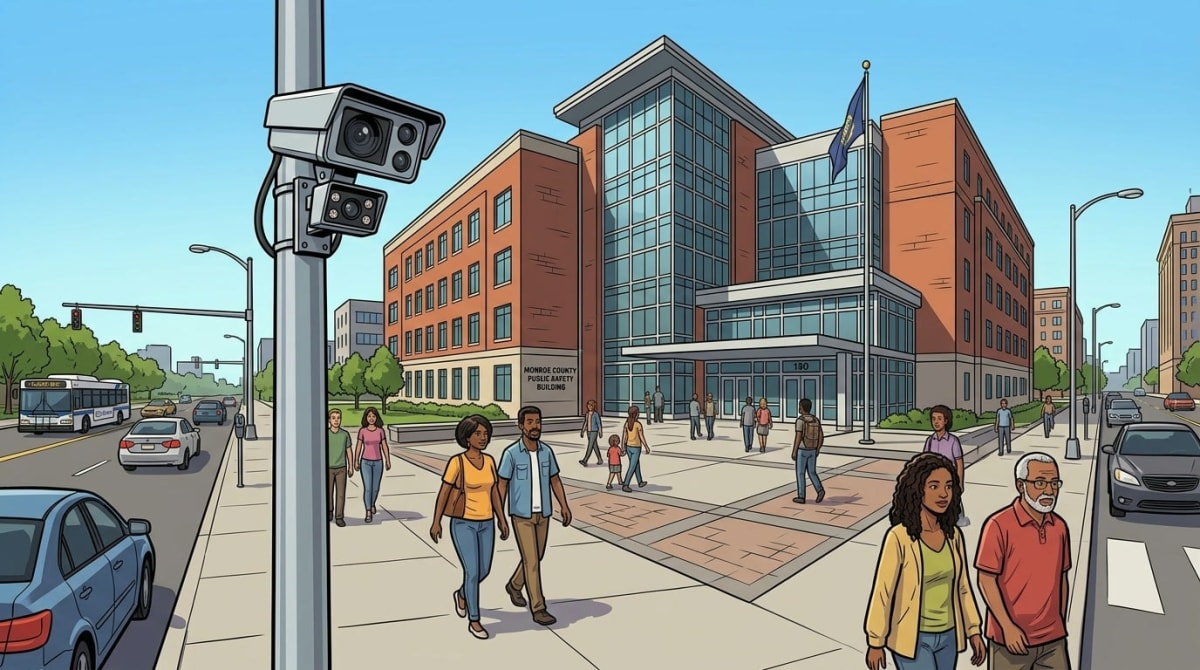
The Monroe County Sheriff's Office launched its Monroe County license plate readers network in February 2026 with $2.85 million in state grant money and 144 cameras fixed to poles across the county. Nine months later, that data is flowing to 392 law enforcement agencies in 20 states — and Monroe County has not disclosed which agencies those are.
How Monroe County's License Plate Reader System Works
How Monroe County's License Plate Reader System Works
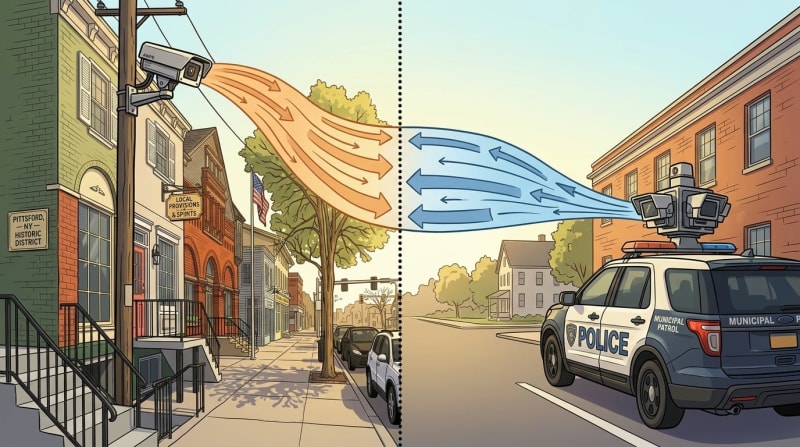
The 144 fixed cameras, funded through a grant from the New York Division of Criminal Justice Services, run on a Motorola platform. The county also operates a separate system of 65 patrol vehicles equipped with Axon readers, whose data stays within the state-run Monroe Crime Analysis Center and is not shared externally.
Sharing through the Motorola network is limited to agencies on the same platform that share their own data in return — a reciprocal arrangement. Monroe County retains all captured plate data for 12 months.
The Monroe County Legislature voted 25–4 in May 2025 to authorize cameras on state rights-of-way. A month before that vote, Chief Deputy Fowler told a legislative committee the system would not be used for federal immigration enforcement.
Monroe County License Plate Readers: 392 Agencies, No Public List

Monroe County License Plate Readers: 392 Agencies, No Public List
That reciprocal network now includes 392 state and local law enforcement agencies across 20 states — but the county has not published the list of which agencies those are, according to reporting by the Rochester Beacon. Chief Deputy Fowler says the agencies were selected by region based on known criminal trafficking corridors: Maine south to Florida and west to Michigan and Mississippi.
A FOIL request filed in August 2026 produced 437 pages of responsive documents when they arrived on November 4. None of those pages included a log of which outside agencies have searched Monroe County plate data. An appeal is pending.
WHAM-TV reported the county has approximately 61 fixed camera locations across Monroe County.
The Control Gap — and What Legislators Are Pushing For
The Control Gap — and What Legislators Are Pushing For
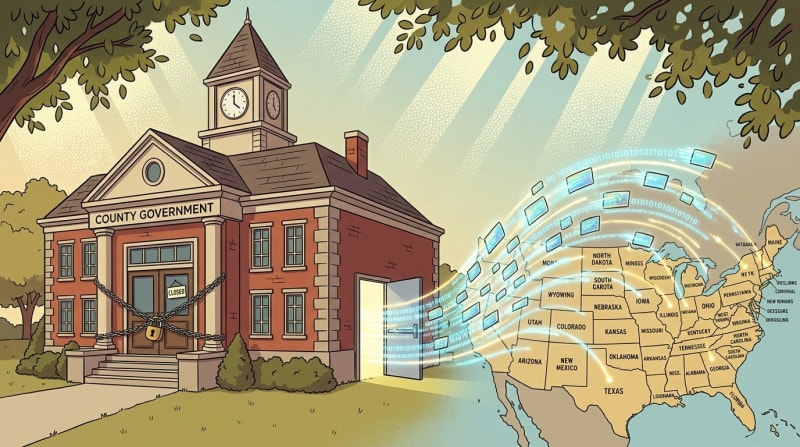
The Motorola platform cannot currently filter which outside agencies search Monroe County data before they reach it. Fowler has asked Motorola to build that feature but says disabling sharing entirely would pose a greater safety risk than waiting for it.
The harder problem is what happens once data leaves the county. Fowler acknowledged to WHAM-TV that agencies in the network could re-share Monroe County data with federal law enforcement, even though the county's own policy bars direct federal sharing. County Legislator Rachel Barnhart, in a statement to the Rochester Beacon:
"The sheriff closed the front door to ICE, but left the back door wide open. Once data leaves Monroe County, we have no control."
— County Legislator Rachel Barnhart, Rochester Beacon, November 12, 2026
Daniel Schwarz, senior privacy and technology strategist for the NYCLU, testified in Albany that the same logic applies to data retention: "The argument that we should keep the data just in case it becomes useful is precisely the logic of mass surveillance and incongruent with any democratic society." A coalition of civil liberties groups is pushing for a 48-hour limit on plate data retention — a sharp reduction from Monroe County's current 12 months.
Albany County Sheriff Craig Apple, president of the New York Sheriffs' Association, also testified that a 48-hour limit would be operationally unrealistic. Two state bills — now in committee — would require both the 48-hour deletion standard and a judicial warrant before any out-of-state sharing. Both must pass before December 31, or they expire and must be reintroduced in the next session.
Content ID: hl6slMzETobubaGsHI98xMvg
See an error? Tell us.

Comments
Share with the Community