
Out of 140 Applicants: Pittsford's Ved Deshmukh Wins American Lung Association Youth Ambassador Award
The Short Version
- Sutherland High School student Ved Deshmukh was named American Lung Association Western NY Youth Ambassador of the Year on June 30, 2026 — selected from approximately 140 statewide applicants for his youth tobacco prevention work.
- Nearly 9 out of 10 adults who smoke daily first tried tobacco before age 18, making high school the most important intervention point in prevention — and peer-led advocacy the most strategically valuable form of it.
- E-cigarettes have been the most commonly used tobacco product among U.S. youth every year since 2014; in 2024, 7.8% of high school students reported using them in the past 30 days.
- 88.2% of high school e-cigarette users chose flavored products — a statistic that reflects deliberate industry design, not just preference.
- Youth ambassadors do more than peer education: they advocate at the state capitol, where young voices carry weight in policy conversations typically dominated by adults.
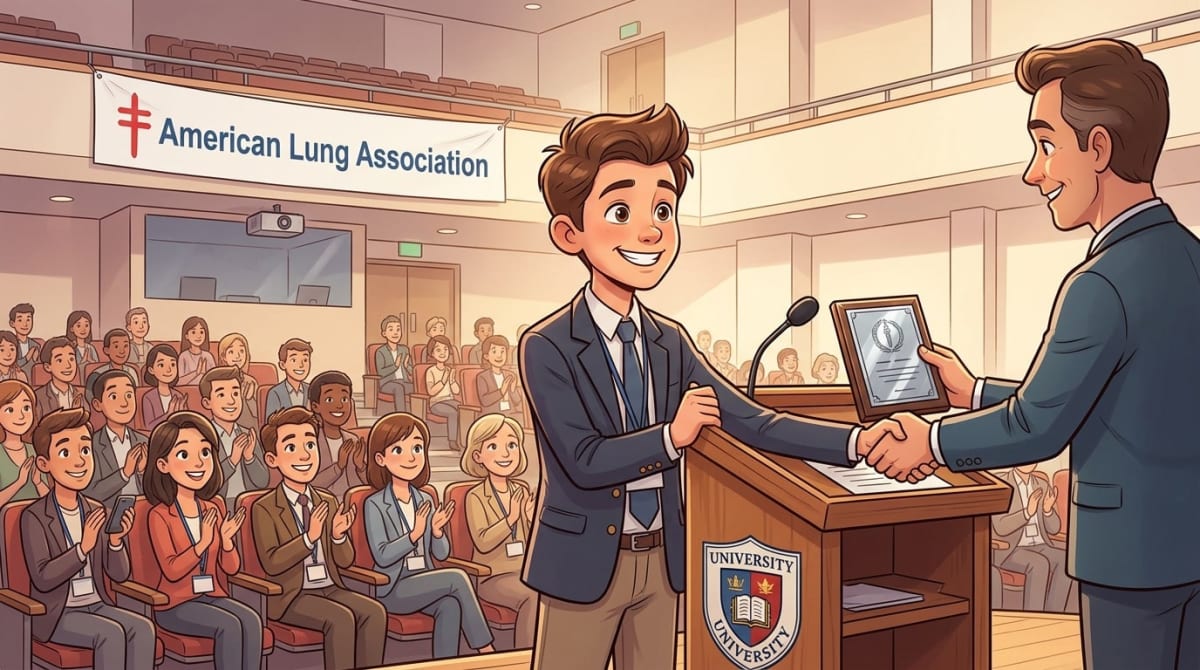
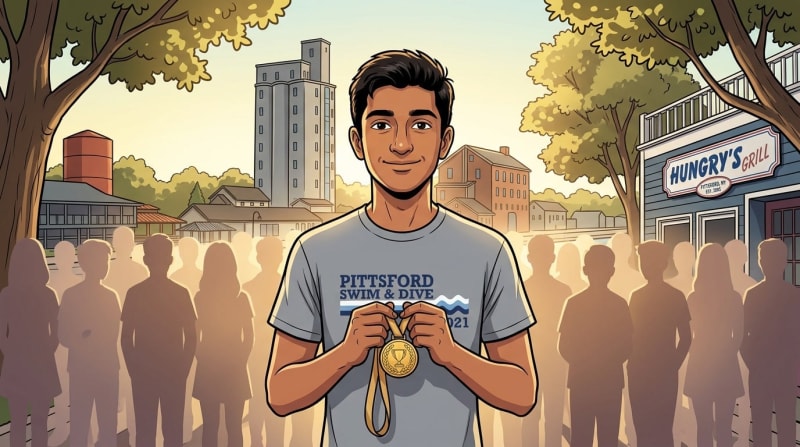
A hundred and forty young people from across New York State applied. One name came through. On June 30, 2026, at a state conference at SUNY Oswego, Pittsford's own Ved Deshmukh — a student at Sutherland High School — was named the American Lung Association Western NY Youth Ambassador of the Year, the program's highest student honor.
The Award — and What It Took to Win
The Award — and What It Took to Win
The American Lung Association's Youth & Young Adults In Action program operates across New York State, training student ambassadors to lead advocacy work in their own communities. Each year, students compete for regional recognition through the work they've actually done — peer education, community presentations, and legislative outreach on tobacco and nicotine prevention. The Ambassador of the Year award is the highest designation the program gives.
According to Pittsford Central School District, Ved was selected from approximately 140 statewide applicants — a field that included students doing meaningful work in every region of New York. And the June 30 recognition wasn't the only one this year: earlier in 2026, he also earned the Best Topic Presentation Award through the same program.
Here's what that selection pool looks like in scale:
One hundred and forty students applied. One was recognized. That gap isn't a credential — it's a body of work. What does it take for a high school student to stand out in a field that size, competing against peers who were already doing the same advocacy across an entire state?
The Work: Fighting Tobacco and Nicotine Use Among Teens
The Work: Fighting Tobacco and Nicotine Use Among Teens
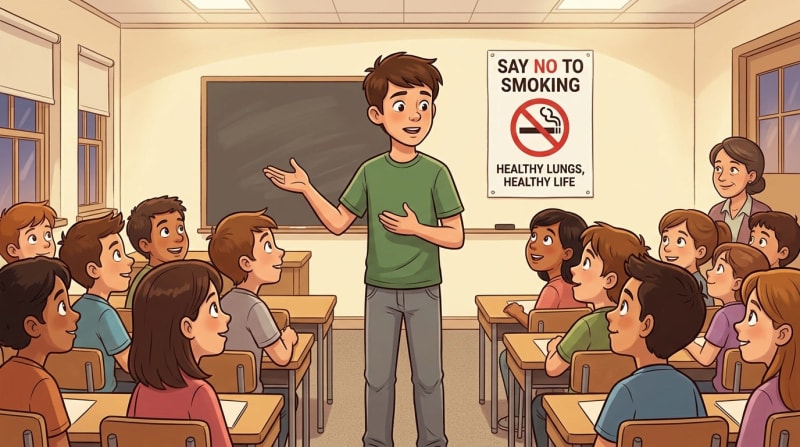
Ved's advocacy focused on tobacco and nicotine use prevention among young people in Western New York — the same communities where his Sutherland classmates live and grow up. The work looks like this: peer education sessions, presentations to school and community groups, and advocacy at the state level for policies that reduce youth access to tobacco and nicotine products.
Why does high school matter so much as the intervention point? According to the CDC, nearly 9 out of 10 adults who smoke daily first tried smoking before they were 18. The dependency window is the teenage years — which means that peer-led prevention work operates at the most strategically important moment in the public health timeline.
That statistic reframes what youth advocacy actually accomplishes. Reaching students before they try tobacco isn't a supplementary goal — it's when the work matters most. A student doing this at 17 is operating at the highest-leverage point in prevention. That's not something most adults get to say about their work.
The Numbers: What Youth Vaping Looks Like in 2024
The Numbers: What Youth Vaping Looks Like in 2024
It's easy to assume the tobacco problem is solved — cigarette rates among teens are down significantly from a generation ago. But the problem has changed shape, not disappeared. According to the CDC, e-cigarettes have been the most commonly used tobacco product among U.S. youth every single year since 2014.
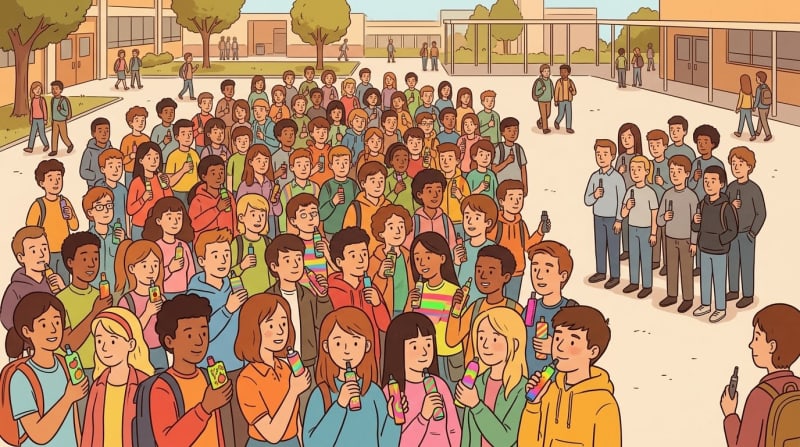
The 2024 numbers put current high school e-cigarette use at 7.8 percent — roughly one in every 13 students. Here's what that proportion looks like:
And among high school students who use e-cigarettes, 88.2 percent chose flavored products. That's not coincidence — it's the product of an industry that has spent years designing products specifically to appeal to first-time young users. Flavors are a recruitment strategy.
Understanding this landscape is part of the ambassador's actual job. The work isn't simply saying that vaping is harmful — it's helping peers understand how they're being targeted, and why these products were designed the way they were. That's a more sophisticated argument, and it takes real preparation to make it well.
What Youth Ambassadors Actually Do

What Youth Ambassadors Actually Do
Student ambassadors in the American Lung Association's program don't just give classroom presentations. They engage with policymakers. They show up at the state capitol on organized advocacy days, representing their communities in conversations that are typically dominated by professionals and lobbyists. Youth voices, properly trained and deployed, carry weight in those rooms in ways that adult voices sometimes can't.
At the community level, ambassadors run peer education sessions, speak at school events, and build relationships with other students that make the message land differently than it does from an adult or a public health pamphlet. That's the practical point of the program: peer credibility is a resource that institutional authority can't replicate. Students listen to other students.
The Ambassador of the Year designation recognizes not just participation but demonstrated leadership — sustained engagement over time, visible impact, and the capacity to represent the work persuasively at the state level. Earning it from a field of 140 applicants, all of whom were already doing this work, speaks to something specific about what Ved built this year.
What would it take for more Pittsford students to find programs like this — places where their convictions can become action?
Pittsford, Proud
Pittsford, Proud
There's a familiar phrase for moments like this: the community is proud. That's true — and it's also not the most interesting part of the story.
The more interesting part is what it took to sustain this work. Competing against 140 peers across New York State requires something different from grades or test scores. It requires showing up repeatedly for a real-world problem — building knowledge, doing the advocacy when there's no visible audience, finding out what you believe and then doing something with it. That's a different kind of achievement, and it doesn't appear on a transcript.
Pittsford Central School District recognized Ved's work in the context of a school culture that creates space for exactly this kind of engagement — students who take on something outside the curriculum and carry it all the way to a state conference. That culture doesn't generate itself. It gets built, year by year, by teachers, administrators, families, and students who take each other seriously.
What other work is already happening here — work that hasn't been named yet? Who else is showing up, week after week, doing something that matters? The number 140 says something about the scale of the competition. But it also says something about a generation of young people who decided that advocating for their own health — and the health of their peers — was worth their time.
That's the gift worth watching for.
Content ID: 2BQJJhrxG92uaV6nTjL8xsz7
See an error? Tell us.

Comments
Share with the Community