A Pittsford Man with Dementia Returned to the Stage. Music Therapy Got Him There.
The Short Version
- Grant Fowler, a Pittsford guitarist living with dementia, performed 'Sloop John B' at Aurora Brewing's open mic after music therapy sessions with Meredith Conklin of Finger Lakes Music Therapy.
- Conklin's approach starts from what the body already holds — she noticed Fowler's hands gravitated to the key of E and arranged his sessions around that, letting muscle memory lead rather than verbal memory.
- A Cochrane review of 30 studies involving 1,720 people found music-based therapy probably improves depressive symptoms in dementia — a drug-free alternative to pharmacological approaches.
- Frequent music listening is associated with 39% lower dementia risk; frequent instrument playing with 35% lower risk, according to a 2025 study of nearly 11,000 adults over 70.
- The caregiver benefit is as concrete as the patient benefit — Barbara McPherson said the sessions give Grant something positive and free her up as a caregiver at the same time.
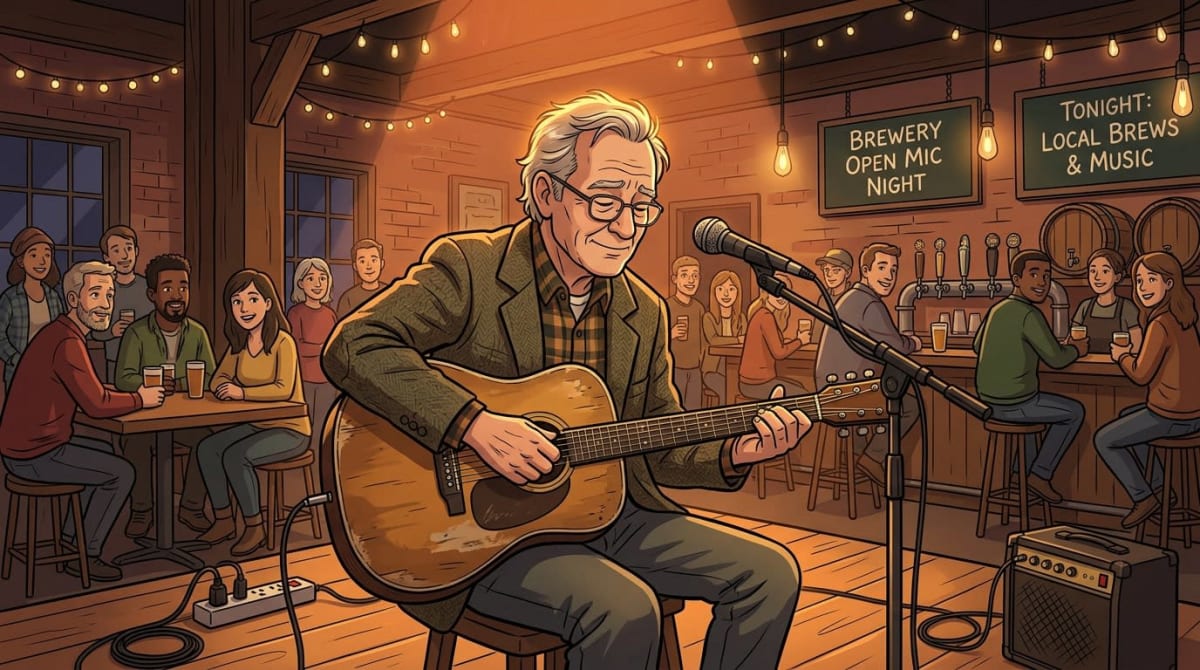
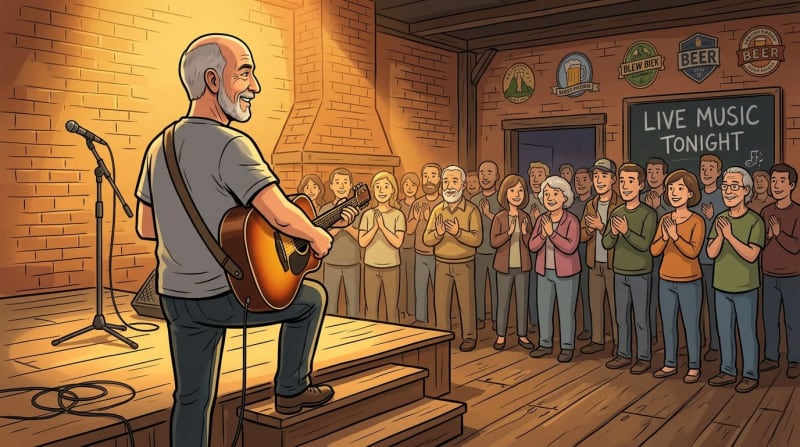
Grant Fowler told the crowd at Aurora Brewing's open mic what he was dealing with before he played a note. He has dementia. He said so plainly. Then he picked up his guitar and played "Sloop John B."
That performance didn't happen in spite of his diagnosis. It happened because of music therapy for dementia — specifically, the sessions he'd done with Meredith Conklin, a therapist at Finger Lakes Music Therapy who had spent months finding what his hands still knew.
Back on Stage at Aurora Brewing
13WHAM covered Fowler's story in a piece that captures what the sessions produced: not a return to who he was before the diagnosis, but a door back to something he'd believed was closed.
"I have dementia, in case anybody doesn't know. Well, it's tough to play the guitar when you can't remember the notes, and she's been terrific."
— Grant Fowler, performing at Aurora Brewing
His wife, Barbara McPherson, named the other half of the equation. The sessions give Grant something positive. They also free her up as a caregiver. Grant gets something to look forward to. Barbara gets an hour.
How Music Therapy for Dementia Works
How Music Therapy for Dementia Works
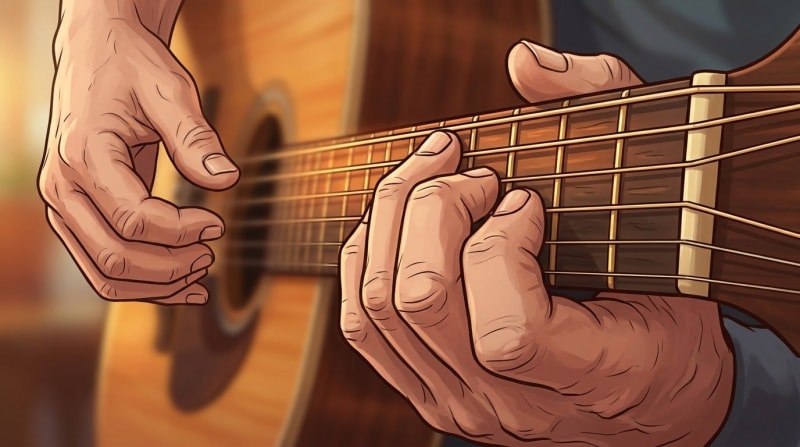
Conklin's approach with Fowler started from a simple observation: his hands kept finding the key of E. She didn't try to move him away from it. She arranged music in the key his body already knew, letting muscle memory lead rather than asking verbal memory to follow.
This is the core of music therapy for dementia. Familiar songs — particularly ones tied to earlier decades of a person's life — activate neural pathways that dementia affects less severely than the ones governing language and sequential memory. The hands can hold something the mind can no longer name.
The method is adaptive, not corrective. No drilling on lost notes. No pressure to recall chord names. The goal is playing — and for a guitarist who had put his instrument down, that is already the whole point.
What the Research Shows About Music and the Aging Brain
What the Research Shows About Music and the Aging Brain
The evidence base behind this approach is growing. A Cochrane systematic review of 30 studies involving 1,720 people found that music-based therapy probably improves depressive symptoms in people with dementia by end of treatment — a drug-free, person-centered alternative to pharmacological approaches.
A 2025 study of nearly 11,000 adults over 70, published by the National Endowment for the Arts, found that frequent music listening was associated with 39% lower dementia risk. Frequent instrument playing came in at 35% lower risk. These are associations, not controlled trials — but the direction holds across studies.
Finger Lakes Music Therapy is among the local resources bringing this work to the Rochester area. The full 13WHAM report on Grant Fowler names the practitioners and the practice. He walked onto the Aurora Brewing stage with his guitar.
Content ID: KGdHHnUhnI2OjVUKHTLqjA51
See an error? Tell us.

Comments
Share with the Community