
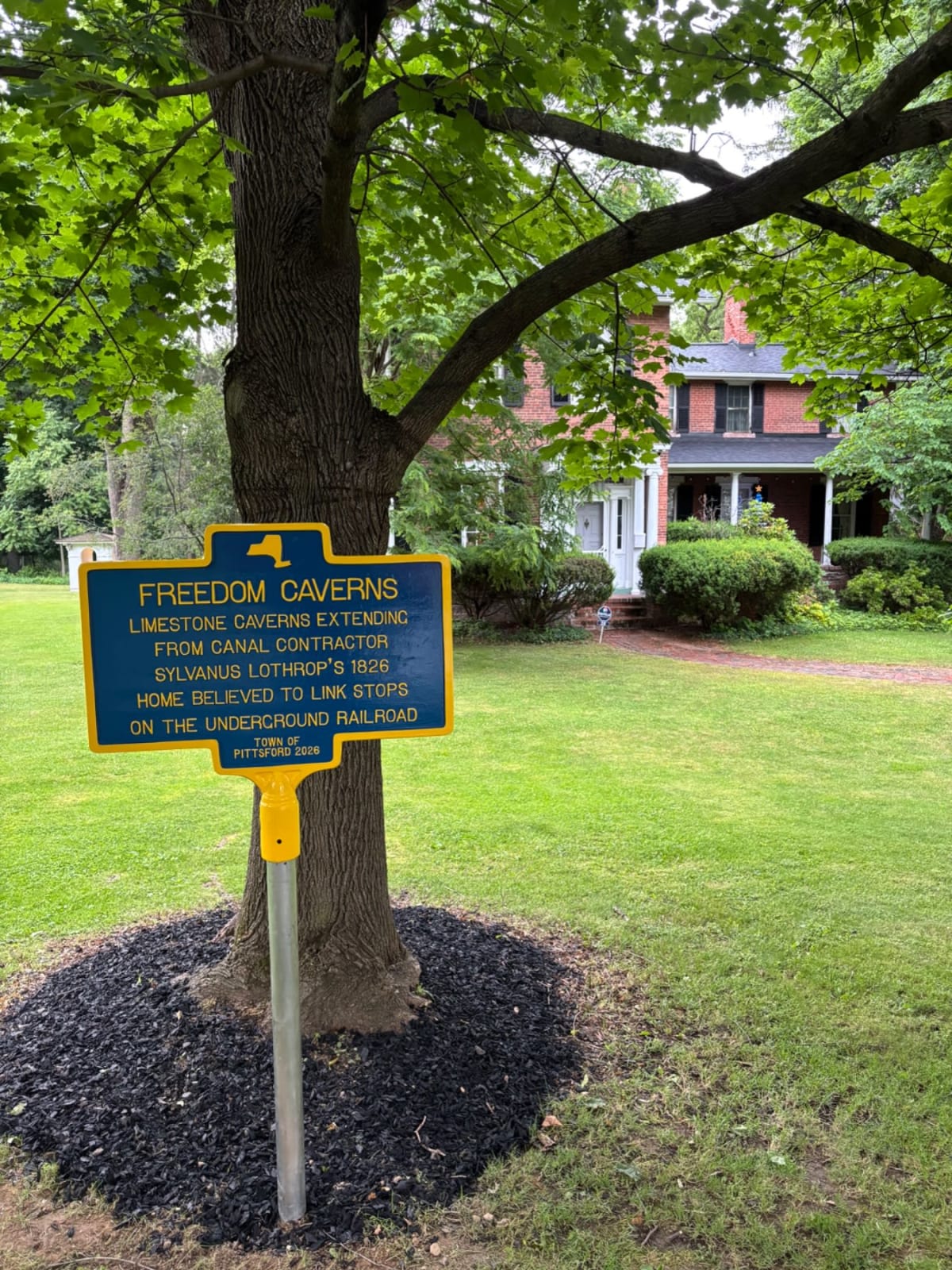
Freedom Caverns: Pittsford's Hidden Chapter of Underground Railroad History
The Short Version
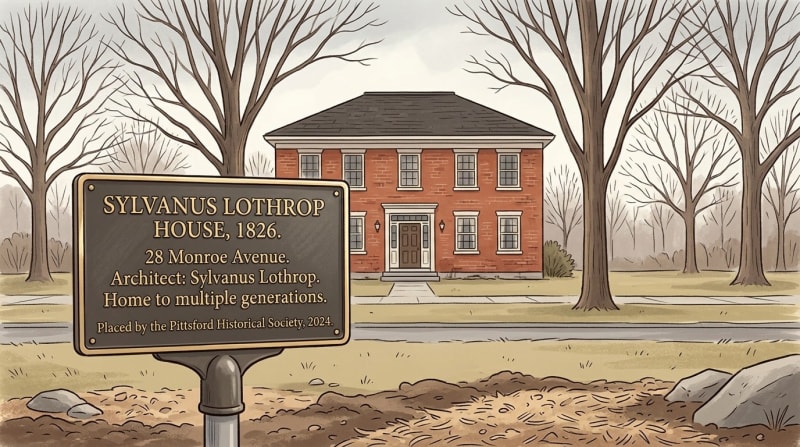
- Pittsford's new Freedom Caverns historic marker at 28 Monroe Avenue names the limestone caverns beneath the 1826 Sylvanus Lothrop House as a believed stop on the Underground Railroad network moving freedom seekers north.
- The marker was dedicated on Friday, June 19 — Juneteenth — free and open to the public, marking both the national holiday and the house's 200th anniversary in the same gesture.
- Lothrop helped build the Erie Canal through Pittsford in the early 1820s — the same infrastructure that made the village a viable northward corridor for people escaping slavery.
- Historic Pittsford's Underground Railroad Walking Tour with Robert Corby offers a fuller walk through the whole network, departing from the Pittsford Community Library.
- The Town Historian's Office at townofpittsfordny.gov/historian holds primary source materials on local history — an underused resource in a community that hasn't finished uncovering its own story.
There is a house at 28 Monroe Avenue that most people drive past without a second look. Built in 1826, the year after the Erie Canal opened, it has been standing at the edge of Pittsford's commercial district for two hundred years. On Juneteenth 2026, that house got a marker that puts Pittsford Underground Railroad history into stone — not just to note the building's age, but to name what happened underneath it.
The Sylvanus Lothrop House and the Erie Canal Era
The Sylvanus Lothrop House and the Erie Canal Era
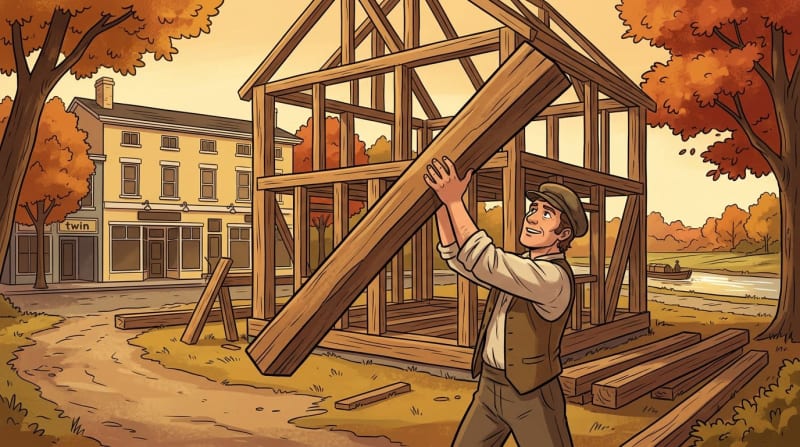
Sylvanus Lothrop built his house in 1826 while helping reshape the landscape of western New York. The Erie Canal had opened in 1825 after eight years of construction — 363 miles of engineered waterway connecting the Hudson River to Lake Erie, built with an enormous amount of human labor. According to the New York State Canal Corporation, freight costs on the corridor dropped by roughly 95% in the decade after the canal opened. Towns along the route didn't just grow — they became nodes in a regional network of movement and commerce.
Here is what that growth looked like along the canal route, using Rochester as the nearest proxy for what the canal did to communities in this corridor:
Pittsford sat directly on that route, close enough to Lake Ontario and its Canadian border crossings that it occupied a particular kind of geography — useful for commerce, but also useful for passage. The village became a waystation in the truest sense: people and goods moved through it, and the infrastructure for movement that Lothrop helped build could serve more than one kind of traveler. What gifts get quietly built into a place by the hands that construct it — and who gets to carry them forward?
Freedom Caverns: What the Limestone Hid
Freedom Caverns: What the Limestone Hid
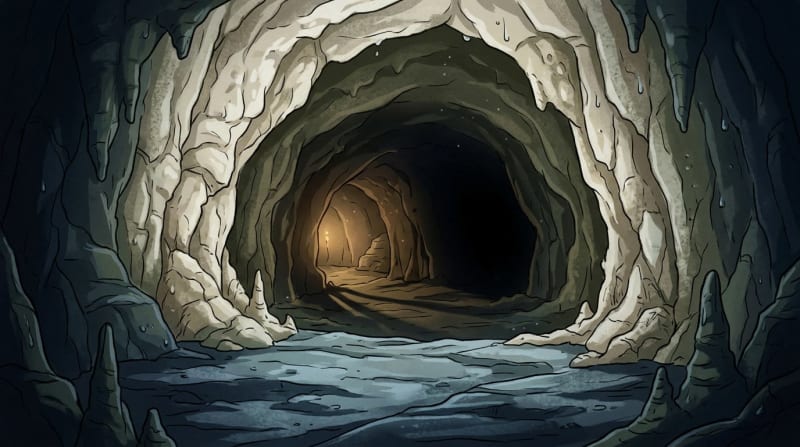
The limestone bedrock beneath Monroe County isn't just geology. In the first half of the nineteenth century, it was also a kind of architecture. Natural caverns formed by centuries of water moving through soluble rock created spaces beneath certain properties along the canal corridor — cool, dark, and well off the road. According to the Town of Pittsford, limestone caverns extending from the Lothrop property are believed to have connected stops on the Underground Railroad, forming part of a network that aided freedom seekers traveling north.
"Limestone caverns extending from the Lothrop property are believed to have connected stops on the Underground Railroad, forming part of a network that aided freedom seekers traveling north."
— Town of Pittsford eNews, June 17, 2026
The name Freedom Caverns holds two meanings at once — the physical place and what that place made possible. Usually history names sites after their builders, their owners, their donors. This one names the people who passed through in secret, who left no deed or tax record, only the weight of what they carried and the direction they were heading.
The evidence is a combination of oral tradition and physical geography — the kinds of sources that formal history has sometimes dismissed and communities have long preserved. The limestone is real. The network was real. The "believed to have" framing is honest, not a diminishment. What happened in those caverns belongs to the category of things we know occurred far more often than the written record shows. The northward route made geographic sense from Pittsford:
A Ceremony 200 Years in the Making — on Juneteenth
A Ceremony 200 Years in the Making — on Juneteenth
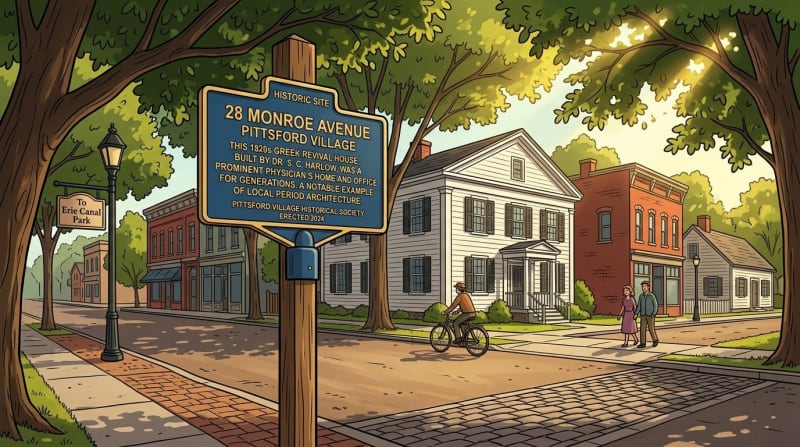
The Freedom Caverns historic marker was dedicated on Friday, June 19, 2026 — Juneteenth — at 28 Monroe Avenue, in a ceremony free and open to the public. The marker is permanent; you can visit it any time.
The date was not incidental. June 19 is Juneteenth, the national holiday marking June 19, 1865 — the day that enslaved people in Galveston, Texas, received official word that the Civil War had ended and they were free, more than two years after Lincoln signed the Emancipation Proclamation. Congress recognized Juneteenth as a federal holiday in 2021. The 200th anniversary of the Lothrop House landing on Juneteenth 2026 is the kind of alignment that doesn't feel accidental. Dedicated on a day that marks the end of the system that made those caverns necessary — that's something a community gets to do once, if it pays attention.
The Erie Canal cut freight costs by roughly 95% when it opened. But it also moved something else — it made the corridor through Pittsford viable for people escaping slavery, people who had no papers, no legal protection, and who relied entirely on the willingness of neighbors to take a risk on their behalf. That's a different kind of cost. And a different kind of gift.
Historic Pittsford runs periodic Underground Railroad Walking Tours, led by Robert Corby, departing from the Pittsford Community Library. This is the fuller walk through the network, not just one node. If the marker opens a question for you, the walking tour is where that question finds some company.
How to Explore Pittsford's Underground Railroad History
How to Explore Pittsford's Underground Railroad History
The marker at 28 Monroe Avenue is the most visible entry point, but Pittsford's Underground Railroad history is distributed across the landscape — multiple sites, multiple routes, multiple people who made choices about who they would shelter and at what personal risk. Robert Corby's walking tour, offered through Historic Pittsford, visits these stops as a connected whole. That's the difference between a single note and a piece of music. Advance registration is typically required.
For those who want primary sources — historical records, genealogy, documents — the Town Historian's Office at townofpittsfordny.gov/historian maintains materials related to local history. It's an underused resource in a community that sometimes assumes its history has already been fully told.
It hasn't. The Freedom Caverns marker is evidence of that. What gets named gets remembered. What gets remembered gets passed forward. What else in this village is still waiting for someone to ask the question?
Content ID: tX9Uy16ovlEHfMKCHvehgBzz
See an error? Tell us.


Comments
Share with the Community