
Pittsford Schools Are Asking for Your Voice — What the May 30 Community Dialogue Is About
The Short Version
- The RSVP deadline for the May 30 community dialogue at Calkins Road Middle School is May 22 — registration is required and capacity is limited, so sign up before the window closes.
- The 2026-27 PCSD budget passed with 78% approval — 2,251 yes votes — giving the district an unusual opportunity to plan from community trust rather than crisis.
- 89% of PCSD schools are rated above average compared to 35% statewide, and student-teacher ratios at top Pittsford elementary schools run around 11 to 1 versus a national average of 15.
- The session is open to all Pittsford community members, not just school parents — longtime residents without children in the system hold perspectives the district also needs.
- Karl Dubash joins as Assistant Superintendent for Business on July 1, making this a genuine transition moment when community input can shape how new leadership sets its first-year priorities.
There is a kind of vote that never shows up on any ballot. It's the Tuesday morning carpool, the volunteer who spends three hours at a board meeting because they still care about a school they graduated from thirty years ago, the neighbor who shows up not because their kid is enrolled but because they know what good schools do to a community. Pittsford casts that vote constantly. Last month, it cast the formal one too: 2,251 yes to 617 no on the 2026-27 school budget.
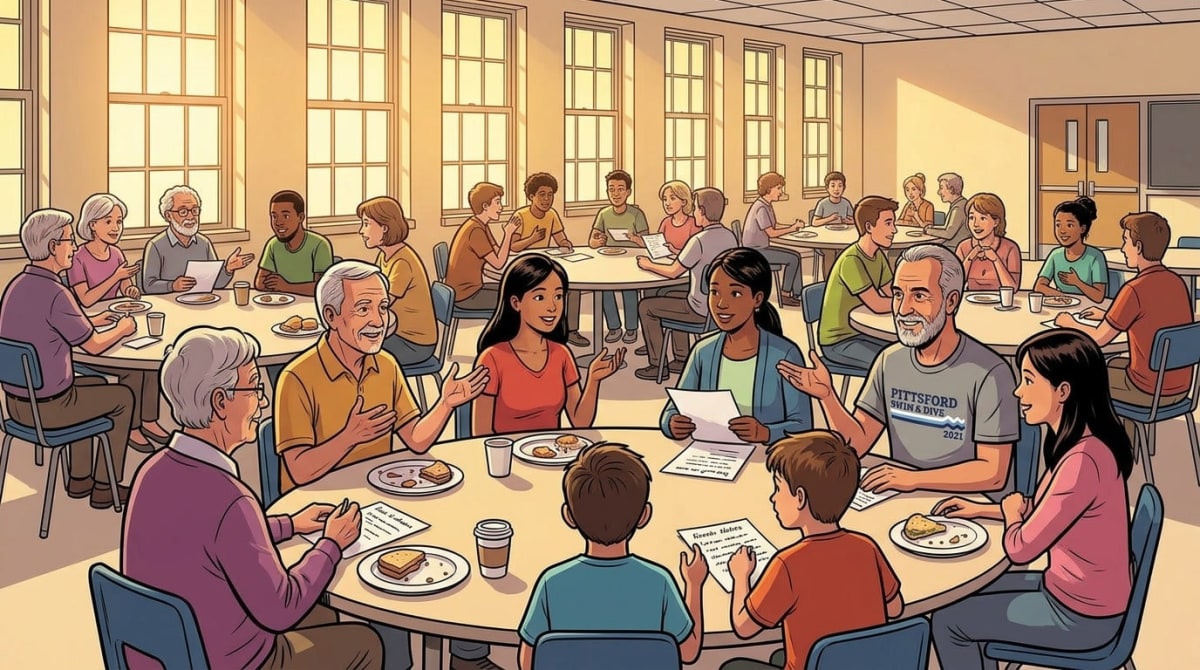
The Pittsford schools community dialogue this May 2026 is the district's answer to what comes after that yes. On Saturday, May 30, Pittsford Central School District is hosting a structured working session on its future direction at Calkins Road Middle School — open to all community members, not just school parents. The RSVP deadline is May 22. If that date is still ahead of you, there is time.
What the Pittsford Schools Community Dialogue Is and Who It's For
What the Pittsford Schools Community Dialogue Is and Who It's For
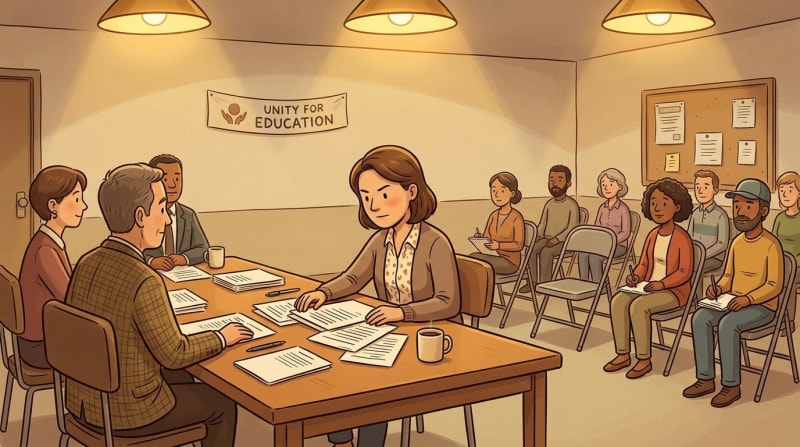
The session runs from 9 a.m. to noon on Saturday, May 30, in the cafeteria at Calkins Road Middle School. According to the Pittsford Central School District website, an RSVP is required — this is a working session with a structured format, not a drop-in public comment period.
One thing worth saying clearly: this session is for the whole community, not just parents of current students. Longtime residents without children in the system hold perspectives about community priorities that no parent of a first-grader can offer — what was here before, what the community has worked to protect, what gets lost when the focus narrows too far. The district is asking for all of it.
A community dialogue is deliberately different from a board meeting or a budget hearing. Board meetings follow Robert's Rules and a fixed agenda. Budget hearings solicit comment on a specific financial proposal. A community dialogue is designed to surface ideas, values, and priorities before decisions are made — so the planning process reflects what residents actually care about, not just what administrators already assumed. If you have ever wanted to be part of a conversation before the plan was already written, this is that moment.
What would it mean for Pittsford to shape the next decade of its schools from that position?
Why the District Is Holding This Dialogue Now
Why the District Is Holding This Dialogue Now
Timing matters. This session is happening at what feels like a genuine inflection point for PCSD — not a perfunctory calendar check-in.
The budget vote tells you where community confidence stands. 78% of voters said yes to the 2026-27 budget — 2,251 for, 617 against. Institutions tend to hold community dialogues when something has gone wrong. Pittsford is holding one when trust is running high. That produces a different kind of conversation — and a better foundation to build from.
There is also new leadership arriving. Karl Dubash has been appointed Assistant Superintendent for Business, effective July 1, 2026, bringing more than 20 years of experience in secondary education and school business administration. Community input gathered now can genuinely inform how Dubash approaches his first full planning and budget cycle. That window closes fast once a new leader settles into their priorities.
The broader pattern holds too. Districts that sustain excellence over decades do not do it through inertia — they treat strategic planning as a recurring conversation, not a response to crisis. Gathering community input when things are going well is exactly the discipline that keeps good schools from drifting.
What Pittsford Schools Are Already Getting Right

What Pittsford Schools Are Already Getting Right
Before talking about future direction, it is worth being concrete about what the community is being asked to help protect.
According to GreatSchools, 89% of PCSD schools are rated above average. The New York State average is 35%. That gap — nearly 2.5 times the statewide rate — is not something most districts achieve, and it does not maintain itself without sustained, deliberate decisions about what to prioritize.
Individual schools tell the same story. Thornell Road School holds a 10/10 rating on test scores from GreatSchools. Jefferson Road rates above average with strong outcomes across student groups. The district serves 5,516 students across 9 schools, with student-teacher ratios running around 11 to 1 at top elementary schools — a level of staffing that most districts in the region cannot match.
The operational picture holds as well. All 234 district buses passed the most recent NYSDOT semi-annual bus inspection with a 100% passing rate. That detail sounds administrative until you consider what 100% means across a fleet of 234 vehicles — no exceptions, no deferred maintenance, no buses quietly pulled from service because the budget ran thin. The standard the district holds in the places you see it, it holds in the places you don't.
This is what the community dialogue is being asked to sustain. That is not a small thing to name.
What Topics the Dialogue Might Cover
What Topics the Dialogue Might Cover
The district has described the May 30 session as a conversation about "future direction" — intentionally broad. Structured dialogues are most valuable when they don't predetermine what residents will say. Still, a few threads are natural candidates.
Academic programming tends to be at the center of these conversations. What courses, pathways, and student support structures do community members want protected or developed over the next decade? Advanced coursework, arts programs, vocational preparation, and mental health support all compete for the same planning bandwidth. A dialogue gives residents a chance to name what matters before the next round of budget decisions is made — not after.
Staffing and student support are part of that picture too. The student-teacher ratios that make Pittsford schools distinctive — around 11 students per teacher at top elementary schools, compared to a national public school average of approximately 15 according to the National Center for Education Statistics — don't happen by accident. They are the result of sustained choices about resource allocation that the community helped fund.
Facilities and infrastructure tend to surface in districts anticipating capital needs. Pittsford has active infrastructure work in the broader community — the Village's South and Wood Street improvement project is among the current municipal priorities — and long-range school facility planning often aligns with those broader cycles.
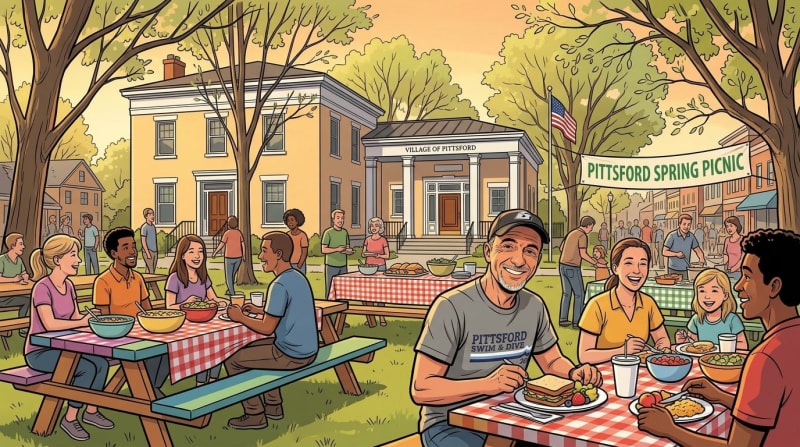
Community partnership is the third thread. Pittsford's civic engagement runs well beyond the school calendar. Village board positions are open right now. The E Pluribus Unum Community Picnic reflects the kind of connective tissue that makes a village feel like more than a zip code. How does the school district stay woven into that fabric — especially for residents who don't have children in the system? That question belongs in the room on May 30.
How to Make Your Input Count

How to Make Your Input Count
A structured community dialogue is not a meeting where the most assertive person wins. These sessions are typically designed to hear from everyone — small group rounds, facilitated discussion, and structured prompts that create space for quieter voices alongside louder ones. Your presence matters even if you never intend to speak publicly.
RSVP first. The deadline is May 22, and registration is through the Pittsford Central School District website. An RSVP is required — this is a working session with limited capacity, not a drop-in event. If you are on the fence, register now and decide closer to the date. You cannot decide to attend after registration closes.
Come with one clear answer. You do not need to know policy details or budget line items. You need to know what you want Pittsford schools to still be known for in ten years — and why that matters to you as someone who lives here. That is the input the district needs most.
Follow the results. Summaries and next steps from community dialogues are typically published on the district website and shared through official communications. If you attend and do not see a follow-up within a few weeks, that is worth raising with your school board representative. Input that disappears into the planning process without visible effect is input the community has reason to be skeptical about providing next time.
The budget vote was 2,251 yes. That trust was given freely. The dialogue on May 30 is the district asking what it should be used for — not just to approve a line item, but to shape what these schools become. That is an invitation worth accepting.
Content ID: Y1yMkt8HpaIQTBo5X1lKBlhw
See an error? Tell us.

Comments
Share with the Community