

Pittsford Village Code Updates: What the Trustees Changed on September 16
The Short Version
- The building inspector says no residential street in the village averages under 31 percent impervious coverage against a 25 percent code cap, so every shed has needed a variance. The fix keeps 25 percent and stops counting structures of 120 square feet or less that are not on a permanent foundation.
- Work vehicles in a driveway can now run 22 feet instead of 18, a limit the building inspector's own truck could not meet.
- Garages can be built to 18 feet without site plan review. Sheds stay at 12.
- Live entertainment at a tavern was, by the letter of the code, a "nightclub." That clause is gone.
- Nobody at the table could say why medical offices were banned from the mixed-use districts after Dr. Rosen's 35 years at 25 South Main. The question was held over traffic concerns at the 41,000-square-foot Pickle Factory.
- None of it is law yet. Zoning changes need a public hearing and county referral, and the board meets next on September 22 at 6 PM.
The first item on the Village of Pittsford trustees' September 16 workshop sheet was a spelling error: somewhere in the code "door" should read "doors." The board spent two minutes deciding whether fixing it needed a motion. Over the next hour they worked through about two dozen Pittsford village code updates that Building Inspector Steve Lauth and the clerk's office had collected over two years. Quotes are from the captions on the village's recording; speakers are not labelled, so I attribute by role.
Pittsford Village Code Updates for Modern Living

Pittsford Village Code Updates for Modern Living
Three changes fix the same problem: limits in the code that made sense once and no longer match the village as it is. Start with the shed. Anyone who wants one in the backyard runs into the zoning code's cap on impervious lot coverage: the roof, driveway, patio and any outbuildings may together cover no more than 25 percent of a residential lot. Lauth has measured the streets against that number: "there is not one neighborhood in this village that is under 31. Most of them are up in 33, 34." So most homeowners are over the cap before the shed exists, and every shed has meant site plan review and a variance. The fix keeps the 25 percent and stops counting small structures, anything "120 square foot or less and not attached to a permanent foundation." The attorney will draft it. Lauth's reason: "I'm just trying to save the board a little time, and I'm trying to save people money."
Garages had the same problem. Accessory structures are capped at 12 feet, a one-car garage with an ordinary roof pitch cannot fit under that, and every new garage has needed a variance Lauth priced at a few hundred dollars "plus a month." Garages may now go to 18 feet without site plan review. Sheds stay at 12.
The longest debate was the truck. Chapter 150 bars any commercial vehicle over 18 feet from a residential district, and "commercial" reaches any vehicle "used in conjunction with any business." Lauth: "My truck requires 21 feet." He had ordered a contractor's truck and trailer off a driveway under a rule his own truck breaks. The board went to 22 feet. "I get it, this is where America's gone," one trustee said. That is the whole sheet in one line: three limits that made sense when they were written and no longer reflect how people live, and a board willing to modernize rather than send one more resident to the Planning Board for a variance.
Main Street: Live Music and the Dentist Who Left
Main Street: Live Music and the Dentist Who Left
The Tavern Overlay rules copied a sentence from the restaurant code: no tavern or brewpub may "operate in any manner as a nightclub," defined as a use "providing entertainment, whether live, recorded or otherwise." Lauth: "We already have multiple facilities that have entertainment at times." The board struck the nightclub clause from the tavern standard and left the restaurant standard alone, since its other tests, safety, neighborhood character and parking, already let the inspector stop a pop-up concert.
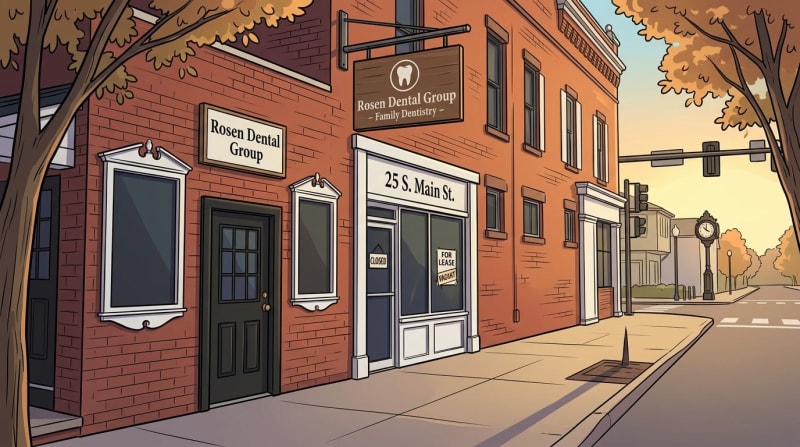
The other Main Street item was a question nobody could answer: why the mixed-use districts stopped allowing medical offices. "Dr. Rosen's office was there for 35 years," one board member said. "And then they change the code. He was gone six months." Village records list Rosen Dental Group at 25 S. Main St. as far back as 2004. One trustee pointed at the Pickle Factory, 41,000 square feet in the same district, and warned that a building that size full of medical offices means "a lot of traffic coming in and out." The question comes back at the next workshop.
Who Can Say Yes to Digging Up a Street

Who Can Say Yes to Digging Up a Street
Section 176-16 makes it unlawful to open "any trench, ditch or other opening" in a village street "without the consent of the Village Board of Trustees." The proposal was to hand that consent to the building inspector. The board said no. Lauth answered with the cases that do not wait for a meeting, an RG&E right-of-way permit, a water main break, a backup at Lattimore where "I didn't come to you guys for that." The compromise keeps consent with the trustees, adds emergency authority for the inspector or the public works superintendent "with a report to the mayor," and covers work already approved in a site plan. Whether the code defines emergency: "Probably not." The rest of the sheet was housekeeping: section numbers that no longer exist, "village clerk" changed to the clerk's office, and a quiet-hours time aligned with the noise ordinance. All of it passed in one motion, by item number.
What Happens Next
What Happens Next
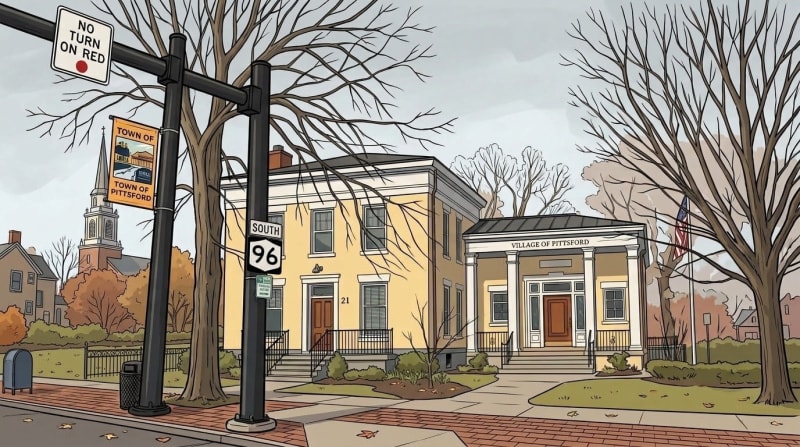
None of it is law yet. Zoning amendments need a public hearing under Village Law 7-706 and county referral under General Municipal Law 239-m, and the attorney is still drafting the shed exemption, the emergency language and the clerk's office wording. The board also acknowledged a State Liquor Authority 30-day notice, the form an applicant files before seeking an on-premises license. The applicant was not named. The Board of Trustees meets next on Tuesday, September 22 at 6:00 PM at Village Hall, 21 North Main Street.
Disclosure: Adam Stetzer, who publishes Pittsford Village Chat, serves as an alternate member of the Village of Pittsford Planning Board and Zoning Board of Appeals.
Content ID: zefvFvYyQJcQkqSxwsPsx2nf
See an error? Tell us.

Comments
Share with the Community