The Campus on East Avenue Is Teaching Students to Actually Understand AI — Not Just Use It
The Short Version
- St. John Fisher University launched an AI literacy minor this fall that teaches students to understand AI's history, ethics, and limits — not just use it.
- The minor is housed in Arts and Sciences, not Computer Science, and requires three foundational courses plus three electives open to students from any major.
- In the AI Foundations course, students train their own image classifier using Teachable Machine and watch it fail — the point is understanding why bias enters a model, not building something polished.
- The capstone has student groups design a physical, analog board game while documenting every AI interaction in a project log.
- Fisher's campus is at 3690 East Avenue — a short drive from most Pittsford addresses — and any student can add the minor without switching programs.
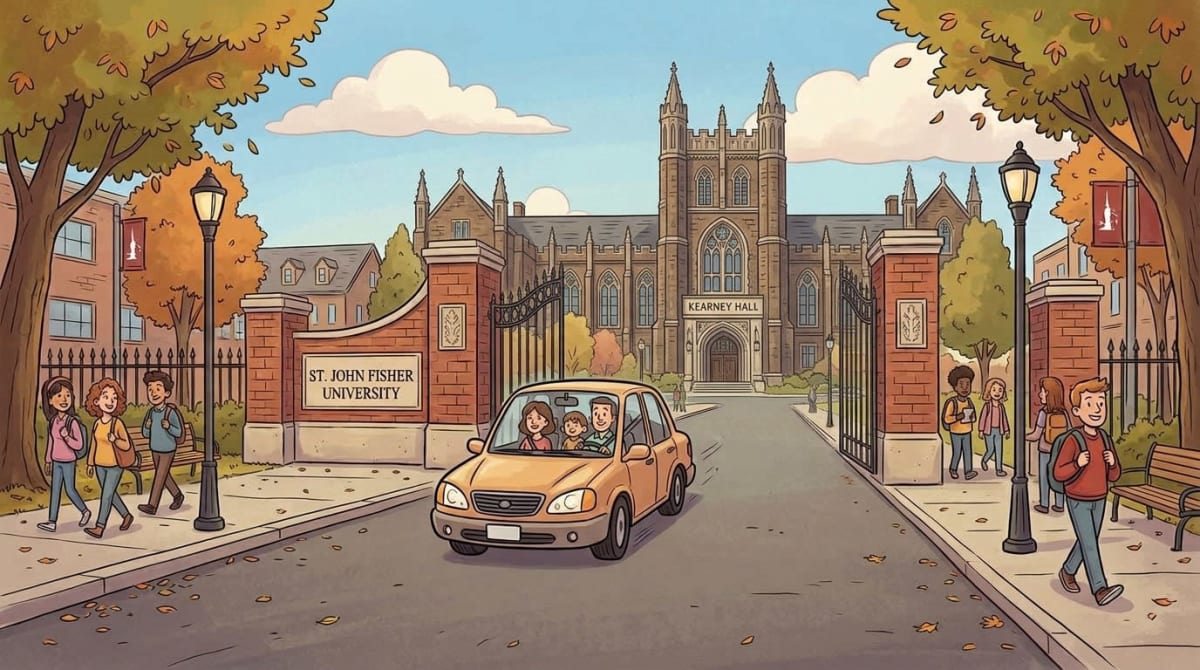
St. John Fisher University sits at 3690 East Avenue, close enough that Pittsford families drive past its gates on the way to Wegmans. This fall, the St. John Fisher AI literacy minor launched in the School of Arts and Sciences — built not around using AI tools but around understanding them.
More Than Prompts: What Fisher Means by AI Literacy
More Than Prompts: What Fisher Means by AI Literacy
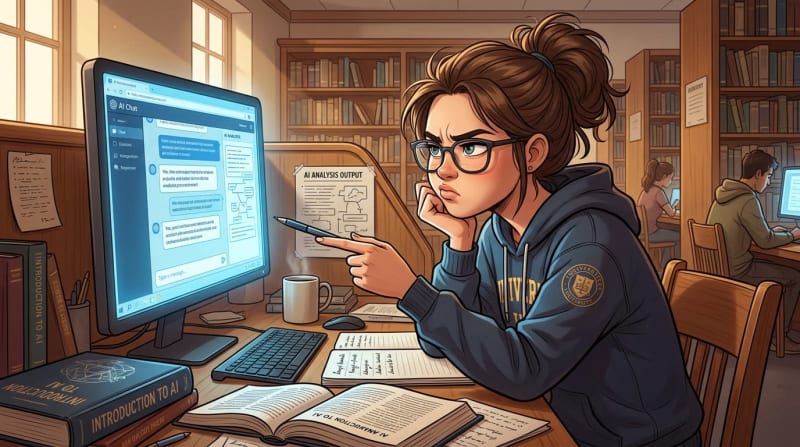
Most AI courses teach students to prompt. This one starts somewhere different — with history, ethics, and the limits of the technology itself.
Interim Dean of Arts and Sciences Dr. Melissa Ghera framed the program's purpose in Fisher's October 2026 announcement: "To remain competitive and grasp the trajectory of artificial intelligence, students must comprehend its historical foundations, its conceptual frameworks, and the ethical parameters governing its application."
That framing — historical, conceptual, ethical — is a deliberate departure from the tool-training model most people associate with AI education. The program lives in Arts and Sciences, not Computer Science. A student in the minor isn't learning to build models. They're learning to interrogate them: where they came from, what assumptions are baked in, and when to trust the output.
Inside the Classroom: Six Courses and One Physical Board Game
Inside the Classroom: Six Courses and One Physical Board Game
The minor requires three foundational courses and offers three electives drawn from tracks in AI and society, professional contexts, and the evolving workforce. Any student at Fisher — business, education, health sciences, communication — can add it to their existing degree without changing programs.
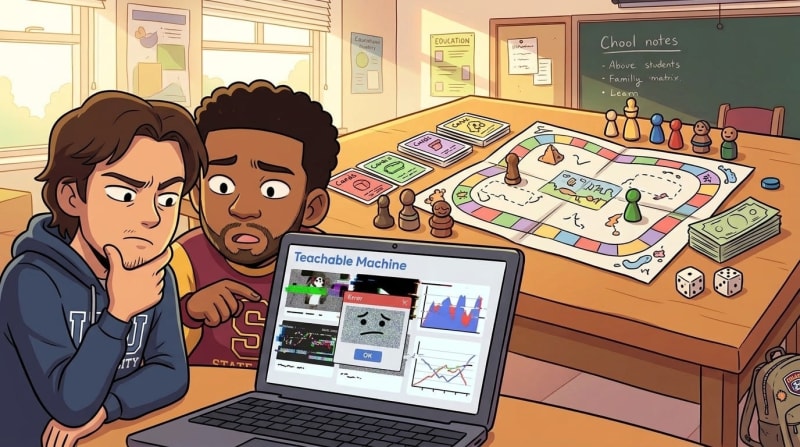
The foundational AI Foundations and Impact course uses Teachable Machine, a Google tool that lets students train a simple image classifier themselves. The exercise isn't about building something useful. It's about watching the model fail — and understanding exactly why. Students see that happen in their own hands. As AVP for Digital Learning Katie Sabourin put it: "This helps students become more critical users of AI systems and understand their strengths and limitations so they can use these tools more effectively in the future."
The capstone pushes further. Student groups build a physical, analog board game, documenting their AI use in project logs throughout the process. The finished game has no software in it.
Why Pittsford Families Should Know About This

Why Pittsford Families Should Know About This
Fisher is a 10-minute drive from most Pittsford addresses. Students who grew up here, or whose families still live here, are already on that campus. The minor is open to any major — a nursing student, an education major, or someone in business administration can graduate with this credential without changing programs.
The employers who will value this skill most aren't only the tech companies. healthcare systems, financial services firms, and school districts are all working out how to integrate AI into daily operations. The difference between a graduate who understands AI and one who merely uses it matters in those settings — where a flawed prediction can affect a patient outcome, a hiring decision, or a classroom. A student who can trace a prediction back to its training data, identify where bias entered, and document what a model contributed is a different hire than one who only knows how to write a good prompt.
More information is at sjf.edu. The campus is at 3690 East Avenue.
Content ID: uDCFN7LBdT8g9MuIkAs9xDNI
See an error? Tell us.
Comments
Share with the Community