
Why Your RG&E Bill Is Going Up — and What Albany Has to Do With It
The Short Version
- RG&E electric bills rose 2.9% on June 1, 2026 — but that was a partial measure; the utility's full rate case would bring the increase to $33.12 per month per customer.
- New York already ranks fifth-highest in the nation for residential electricity prices before RGGI costs are layered on.
- RGGI allowance prices jumped 40% in a single quarter of 2026, from $24.99 per ton in March to $35 per ton by June, with secondary market trading reaching $44.
- New York's state auction collects roughly $500 million annually from RGGI, but analysts estimate total costs to ratepayers run $1.16 to $2.26 billion — because allowance prices set the clearing price for all generators, including renewables.
- NY DEC and NYSERDA locked in tighter RGGI rules through 2037 earlier this year; the PSC rate case for RG&E's full request remains open to public comment.
Your RG&E bill went up in June 2026. If you're trying to figure out why, the answer splits into two separate drivers — one from the utility, one from Albany — and both are still moving.
RG&E Bills Just Went Up — and a Bigger Increase May Still Be Coming
RG&E Bills Just Went Up — and a Bigger Increase May Still Be Coming
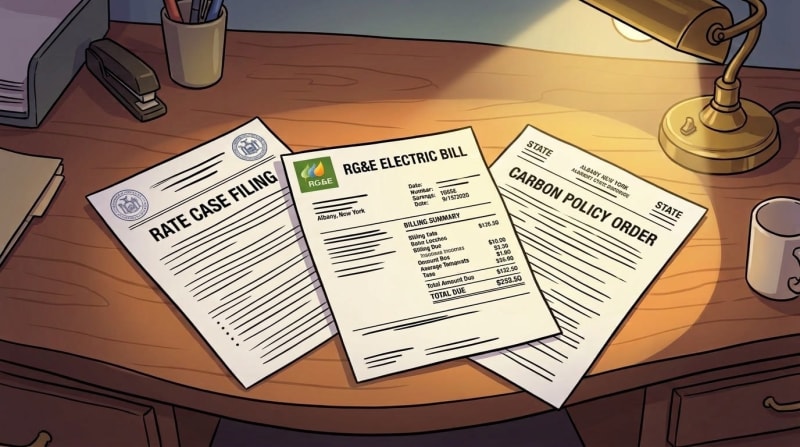
On June 1, the Public Service Commission approved a temporary rate increase for RG&E electric customers: a 4.0% annual revenue increase, translating to about a 2.9% total bill impact. The word "temporary" is doing a lot of work there. RG&E's full rate case is still pending — the utility's original request was for $33.12 more per month per customer to fund grid infrastructure upgrades. The June adjustment was a partial measure while the full case works through the regulatory process.
New York already ranks fifth-highest in the nation for residential electricity prices. The rate case and Albany's carbon policy are two separate cost drivers — but they show up on the same bill.
What RGGI Is and How It Gets Into Your Bill
What RGGI Is and How It Gets Into Your Bill
The Regional Greenhouse Gas Initiative is an 11-state cap-and-trade program. Fossil-fuel power plants over 25 megawatts must purchase carbon allowances at auction for every ton of CO₂ they emit. As Justin Wilcox, executive director of Upstate United, wrote in the Rochester Beacon, the intent is explicit: the program is designed "to intentionally increase the cost of producing electricity from fossil fuels and thereby make lower-emission generation more competitive." The consumer cost isn't a design flaw. It's the mechanism.
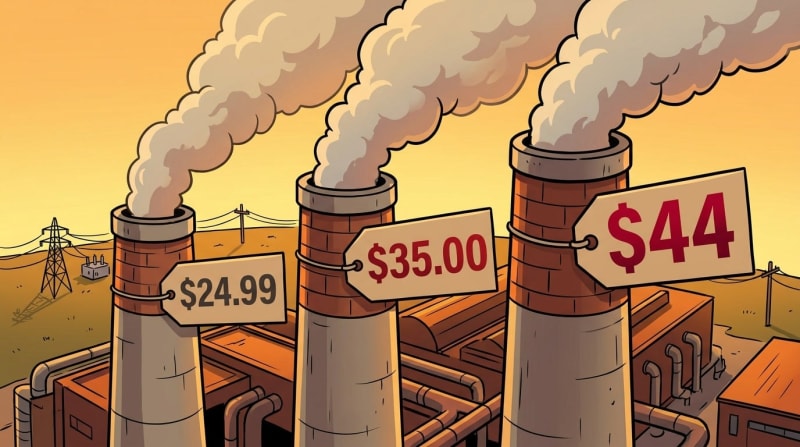
What makes 2026 notable is the speed of the move. RGGI permit prices jumped 40% in a single quarter, from $24.99 per ton in March to $35.00 per ton by June, with secondary market trading as high as $44. A 40% quarterly price spike moves the number on your bill, not just in a policy brief.
The Hidden Math: What You Pay vs. What the State Collects
The Hidden Math: What You Pay vs. What the State Collects
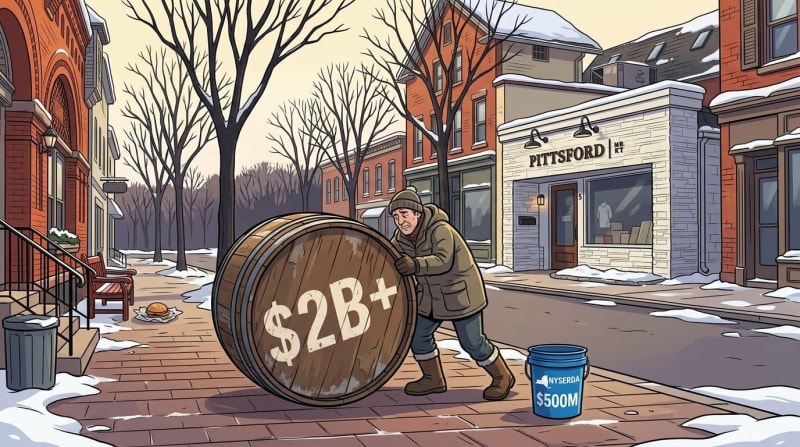
NYSERDA projects collecting roughly $500 million per year from RGGI auctions. That figure sounds like the full cost of the program. It isn't. Because RGGI-elevated bids set the marginal clearing price that all electricity generators receive — including renewables that paid nothing for carbon allowances — Caiazza estimates total consumer costs at $1.16 to $2.26 billion annually. The state collects half a billion; New York ratepayers bear two to four times that.
In 2023, when the average RGGI allowance price was $13.58, carbon costs represented nearly 20% of New York's average wholesale electricity price. Allowances are now trading near $40. NY DEC and NYSERDA formally tightened RGGI rules through 2037 earlier this year.
What Pittsford Residents Can Actually Do With This Information

What Pittsford Residents Can Actually Do With This Information
The PSC rate case for RG&E's full request is still open. RG&E's original rate proposal would raise the typical bill by $33.12 per month — the June 1 adjustment covered only part of that ask. Public comment is part of the rate case process; submissions go to the New York Department of Public Service.
RGGI is a longer policy fight. The rules are locked in through 2037. Revenue from the auctions funds clean energy programs through NYSERDA, but critics in upstate communities argue grid-dependent households pay now while the renewable capacity that justifies the cost is still being built. Your state senator and assembly member voted on the RGGI framework. They're in Albany to hear from constituents.
Content ID: ewaFAK8WpOJXBFprGq4DIWfA
See an error? Tell us.

Comments
Share with the Community