
Monroe County Reports 27% Drop in Children With Elevated Blood Lead Levels
The Short Version
- Monroe County reported 217 children with elevated blood lead levels in 2025, down 27% from 299 in 2024 — and more children were screened this year, not fewer.
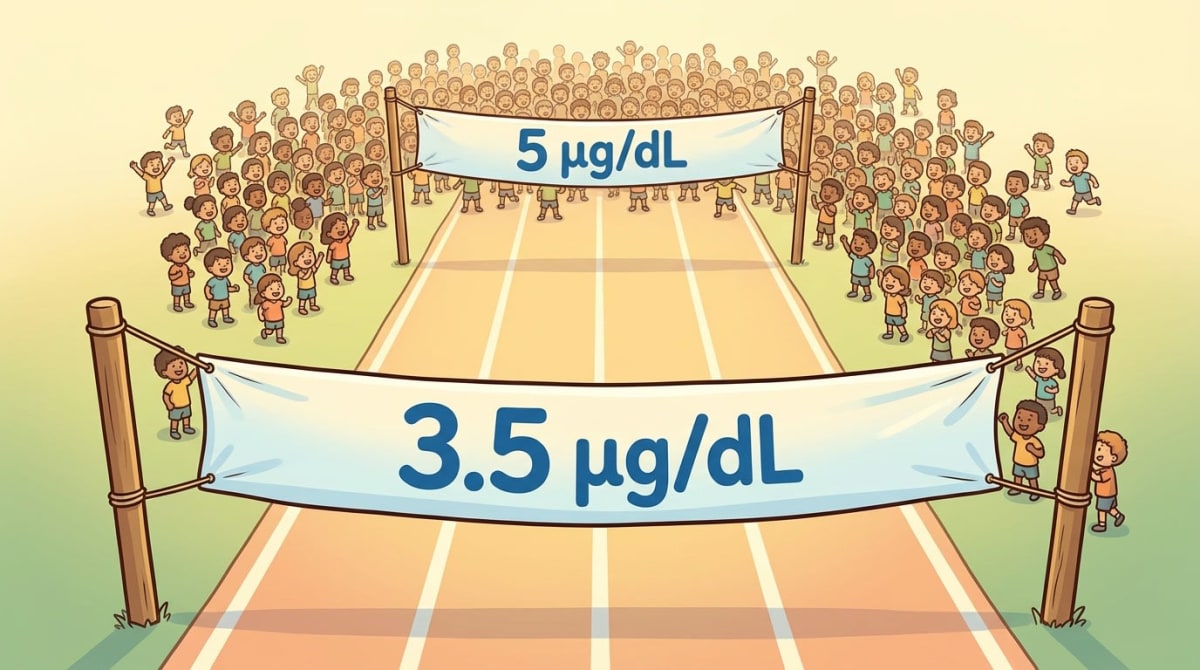
- Monroe County's threshold of 5 µg/dL is stricter than older standards, but the CDC's Blood Lead Reference Value is even lower at 3.5 µg/dL — children above that line are in the top 2.5% nationally.
- No safe level of lead in children's blood has been identified; the CDC is explicit, and the 27% drop is progress, not a resolution.
- When a child tests positive, Monroe County's Lead Poisoning Prevention program opens a case, provides medical case management, and investigates the home for lead sources.
- Pittsford's older housing stock means lead paint and lead plumbing are real considerations — knowing what your home contains is worth the effort.
Monroe County released its 2025 data on blood lead levels in children this week. The headline: 217 Monroe County children had blood lead levels at or above the county's 5 micrograms per deciliter threshold, down from 299 in 2024 — a 27% drop. What makes that number credible is that more children were screened this year, not fewer. The improvement is not an artifact of less testing.
The 2025 Numbers: Blood Lead Levels in Monroe County Children

The 2025 Numbers: Blood Lead Levels in Monroe County Children
Monroe County tested more children for lead in 2025 than in prior years and found fewer with elevated results. The 217 who exceeded the county's threshold represent a 27% decline from the 299 children counted in 2024.
Monroe County defines elevation at 5 micrograms per deciliter (µg/dL). The CDC's Blood Lead Reference Value is lower — 3.5 µg/dL, the 97.5th percentile of blood lead levels among U.S. children ages 1 to 5. Children above that federal standard are among the top 2.5% of U.S. children with the highest blood lead levels nationally. The county's 5 µg/dL threshold captures the most severely elevated cases; the CDC standard is stricter.
The CDC is unambiguous: no safe level of lead in children's blood has been identified. The drop from 299 to 217 is progress, not a finish line.
How Monroe County Responds When a Child Tests Positive

How Monroe County Responds When a Child Tests Positive
A positive test in Monroe County triggers active intervention. The county's Lead Poisoning Prevention program provides medical case management and educational outreach for every child who exceeds the threshold. Public health staff investigate the child's home to identify and eliminate the source of exposure.
The county doesn't just record a number. It opens a case, visits a home, and works to end the exposure. Each of those 217 children in 2025 had a caseworker assigned.
What Parents in Monroe County Should Know

What Parents in Monroe County Should Know
The most common sources of lead exposure for children are lead paint, household dust, and plumbing in older homes. Pittsford has no shortage of older housing stock, and older homes carry a higher likelihood of lead paint and lead plumbing. That doesn't make any particular home unsafe — it makes knowing what you have worth the effort.
"No safe level of lead in children has been identified. Even low levels of lead in the blood can negatively impact a child's health."
— CDC, Blood Lead Reference Value
Blood lead testing is available through a child's pediatrician or directly through the Monroe County Department of Public Health. The CDC's 3.5 µg/dL reference value is worth asking about specifically — some pediatric practices still use older, higher thresholds. If your child hasn't been tested recently, Monroe County's Lead Poisoning Prevention program is the direct path.
Content ID: NwADltMuNyoFAdaMWw5EiCrE
See an error? Tell us.



2 Comments
Comment from Facebook
Adam, the 27% reduction is certainly encouraging news. But there’s another number in your article that caught my attention: 14,556 children tested. For a county the size of Monroe, that seemed like a pretty low number to me. I realize children are required to be tested at ages 1 and 2, so I’m curious what percentage of those eligible children are actually being tested. The reduction is great news, but I think it’s equally important to understand how many children we might not be reaching. Are we getting a complete picture, or could there be more cases going undetected? I’d love to see the testing participation rate included alongside these results. That would tell us a lot more about how we’re doing as a community.
Nov 4, 2026 at 1:41 am
View on Facebook ↗Adam Stetzer
Chris, the article actually does address this direction — more children were tested in 2025 than in prior years, even as fewer were found with elevated levels. So the trend on participation is moving the right way. That said, you're asking a sharper question than that: what percentage of *eligible* children are actually being tested, and I don't have that denominator in front of me. That's worth pursuing, and I agree it would put the 27% drop in much clearer context. https://www.wxxinews.org/local-news/2026-10-29/fewer-monroe-county-children-had-elevated-levels-of-lead-in-their-blood-in-2025 https://pittsfordvillage.com/monroe-county-reports-27-drop-in-children-with-elevated-blood-lead-levels
Nov 4, 2026 at 2:16 am
View on Facebook ↗Comments marked “from Facebook” were shared from our Facebook page. Commenter names are not published here — open the original thread to see them.
Share with the Community