
Early Pittsford History: Before the Canal Money, the Library Books
The Short Version
- Pittsford's founding story starts nineteen years before the Erie Canal — with a school in 1794, a library in 1803, and a church in 1807, all firsts for Monroe County.
- In 1803, Major Ezra Patterson and forty-four neighbors each put up a dollar to start the Northfield Library Company, the first library in the Genesee country.
- That dollar was no small thing: worth about $29 today by inflation, but a day's wages or more when hard cash barely circulated on the frontier.
- The whole collection was seventy-odd shared books kept in a farmhouse — the community's first act at scale was a commons, not a business.
- Where the old records disagree (1794 vs. 1799 for the school, 1808 vs. 1809 for the library's end), the piece shows its work instead of papering over the gaps.
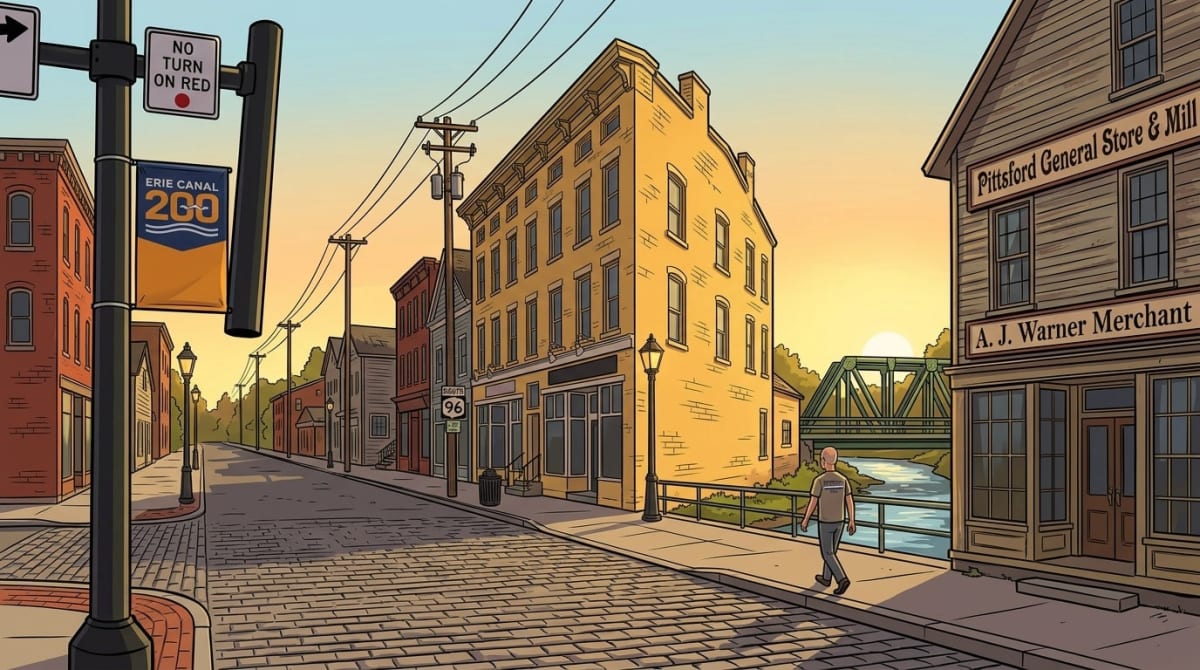
Everyone knows the prosperity story. In most tellings of early Pittsford history, the Erie Canal reached Pittsford in 1822, the village incorporated on July 4, 1827, and the warehouses, mills, and merchant blocks that still line our streets followed. It's a good story, and it's true.
But it isn't the founding story.
Two decades before a single canal boat passed through, the settlement then known as Northfield — the governmental seat for most of what is now eastern Monroe County — was quietly assembling something else: institutions built by neighbors, for neighbors, with no commerce attached.
The firsts
The firsts
According to "A Brief History of the Village of Pittsford", compiled by former Village Mayor Robert Corby and drawing on the community's 2016 National Register boundary-increase nomination, the early settlement contained Monroe County's first school (1794), first library (1803), first permanent church (1807), first post office (1811), and first newspaper (1815).
The Village's own "History of Development" account echoes several of these — a first school built in 1794, a library formed in 1803, a post office established in 1811 — and adds that the community was home to the county's first lawyer and its first practicing doctor.
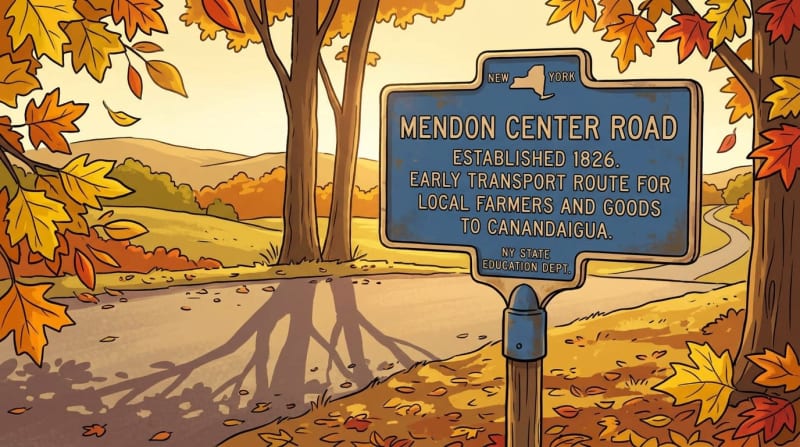
The library claim reaches even further. A historic marker placed by the New York State Education Department in 1938 on Mendon Center Road reads: "First library in the Genesee country — Northfield Library Co., 1803–1808." Not just first in the county. First in the Genesee country.
Forty-four neighbors and a dollar apiece
Forty-four neighbors and a dollar apiece
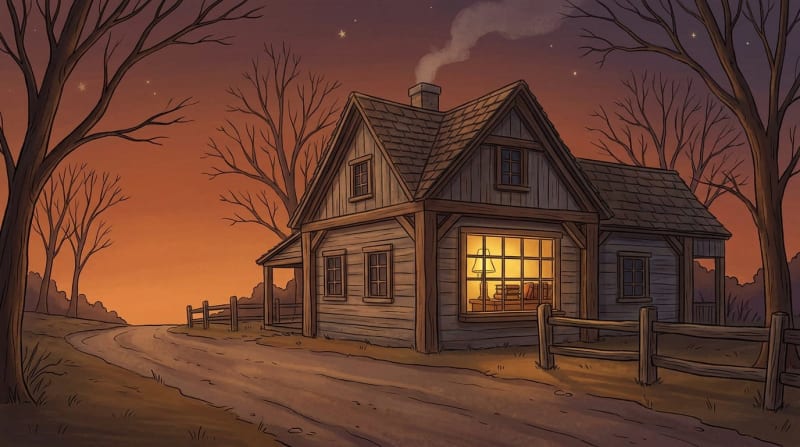
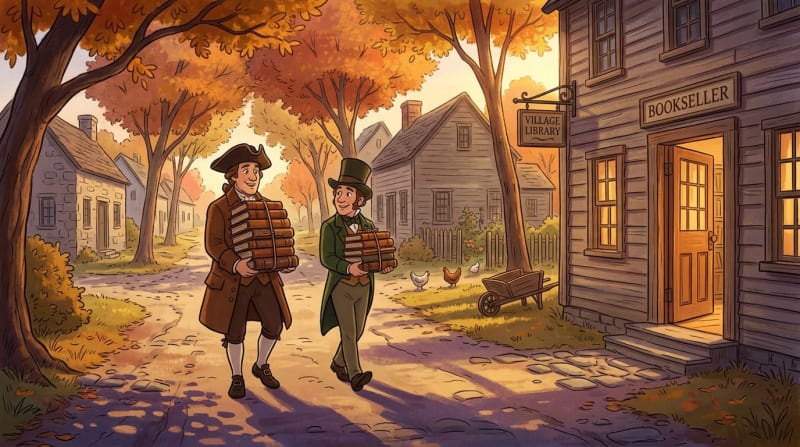
The library is where the founding story comes alive. In 1803, Major Ezra Patterson — a Revolutionary War veteran who had arrived with the first group of settlers in 1790 — and forty-four subscribers organized the Northfield Library Company. Each paid one dollar for a share. The books, roughly seventy to seventy-seven volumes by the accounts that survive, were kept in Patterson's farm home on what is now Mendon Center Road, near the site of today's Mendon Center Elementary School.
Return a book late and you owed a shilling for the first hour, six cents for every hour after. Books were scarce and precious on the frontier, and this community pooled theirs anyway.
What was a dollar, in 1803? By the standard consumer-price measure, about twenty-nine of today's dollars — which would put the whole subscription at roughly $1,300 in modern money. A modest sum, by that reckoning.
But that reckoning misses what the dollar actually cost these people. Purchasing-power math compares what a dollar buys; it says nothing about what a dollar was to a frontier household. In the early 1800s, cash wages for ordinary labor ran somewhere between a quarter and a dollar a day — and farm work was often paid not in coin at all, but in board, in a share of the harvest, in one neighbor's labor traded for another's. Little of frontier life ran on money. Hard currency was scarce, and a whole silver dollar was a real thing to part with: on the order of a day's wages or more for a working man, and a genuine dent in the year's cash for a farming family that might see only a few dozen dollars pass through its hands.
And they spent it on books. Not seed, not tools, not another acre or another ox — on seventy-odd shared volumes kept in a neighbor's front room, with no return except the company of other people's minds. The sacrifice wasn't ruinous. But it was deliberate, and that is the measure of the thing.
Consider what that means. Nineteen years before the canal arrived, forty-four households in a frontier settlement decided that reading together mattered enough to organize, subscribe, and share. The first thing this community built at scale wasn't a business. It was a commons.
Where the records disagree — and an invitation
Where the records disagree — and an invitation
Local history is a living document, and the surviving accounts don't align on every date. In keeping with our practice of showing our work, here is where they differ.
The first school is one such case. Mayor Corby's compiled history and the Village's introduction both give 1794 for the county's first school, while a Town historian's article on the evolution of Pittsford's libraries states that the first school in all of Northfield was established in 1799. We don't know which is right, or whether both are — one possibility is that the dates describe different things, such as the first classes held versus the first schoolhouse built, or two different school locations in a settlement whose center later migrated north. We'd welcome anyone with sources that could settle it.
The library's final chapter is another. The 1938 state marker gives the Northfield Library Company's span as 1803–1808, while a Town of Pittsford history article says the library evidently was dissolved in 1809. The word "evidently" in the Town's own account suggests the closing date was uncertain even to the historians who wrote it down. The company's records apparently do not survive; the difference of a year may simply be the difference between a last recorded activity and a formal dissolution.
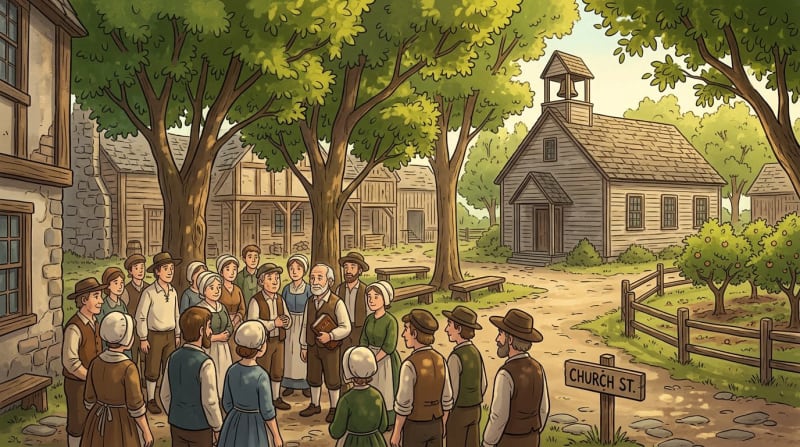
The first church is a third. Corby's history is careful to say the first permanent church dates to 1807. Other accounts note that Pittsford's first congregation — which survives today as First Presbyterian on Church Street — began meeting as early as 1803. These may both be true: a congregation can gather for years before it becomes a permanent, organized institution with a building of its own. We've kept the "permanent" qualifier because that's what the source claims, and the distinction seems to matter.
If you have family papers, old deeds, church records, or a well-worn local history on your shelf that bears on any of these dates, we'd genuinely love to hear from you. The gaps in the record aren't a problem to be embarrassed by — they're an opening for the people who hold pieces of this story to bring them forward.
The seedbed of early Pittsford history
The seedbed of early Pittsford history
Rochester's waterpower soon eclipsed Pittsford as the region's economic center, and the histories tend to frame that as Pittsford being "passed by." But there's another way to read it. Before Rochester was much of anything, this settlement had already established the county's first school, first library, first permanent church, first post office, and first newspaper. The civic infrastructure of eastern Monroe County was seeded here.
The canal brought the money. The neighbors brought everything else — and they brought it first.
Content ID: 8C8TZcbEAQZYY0BVc0uubb2Z
See an error? Tell us.



Comments
Share with the Community