The Pittsford Sidewalk Bike Law: What Changes, What Doesn't, and What's Still Undecided
The Short Version
- Pittsford settled this exact argument in 1894 with a ten-foot rule, four days after arresting seven teenagers for riding on the sidewalk. The current draft asks for fifty feet.
- Banning e-bikes and e-scooters from sidewalks is not a new rule — New York already prohibits it statewide unless a municipality specifically opts in.
- The genuinely new provisions apply to ordinary bicycles: a helmet, a carried bell, fifty feet of separation from any pedestrian, and dismounting through the village center.
- Main Street and Schoen Place become full dismount zones — the three zoning acronyms in the draft translate to the shops and the canal.
- Streets changed more than sidewalks did. In 2023, 1,166 American cyclists were killed in crashes with motor vehicles, and a person struck by a car faces a 50 percent risk of death at 42 mph.
- Trustees tabled the vote after a two-hour February hearing and dropped the original over-12 age ban. Five months later the revised draft is still unpassed, while bike boulevards reach the July 28 workshop.
Seven Wheelmen and the Same Argument We Are Having Now

Seven Wheelmen and the Same Argument We Are Having Now
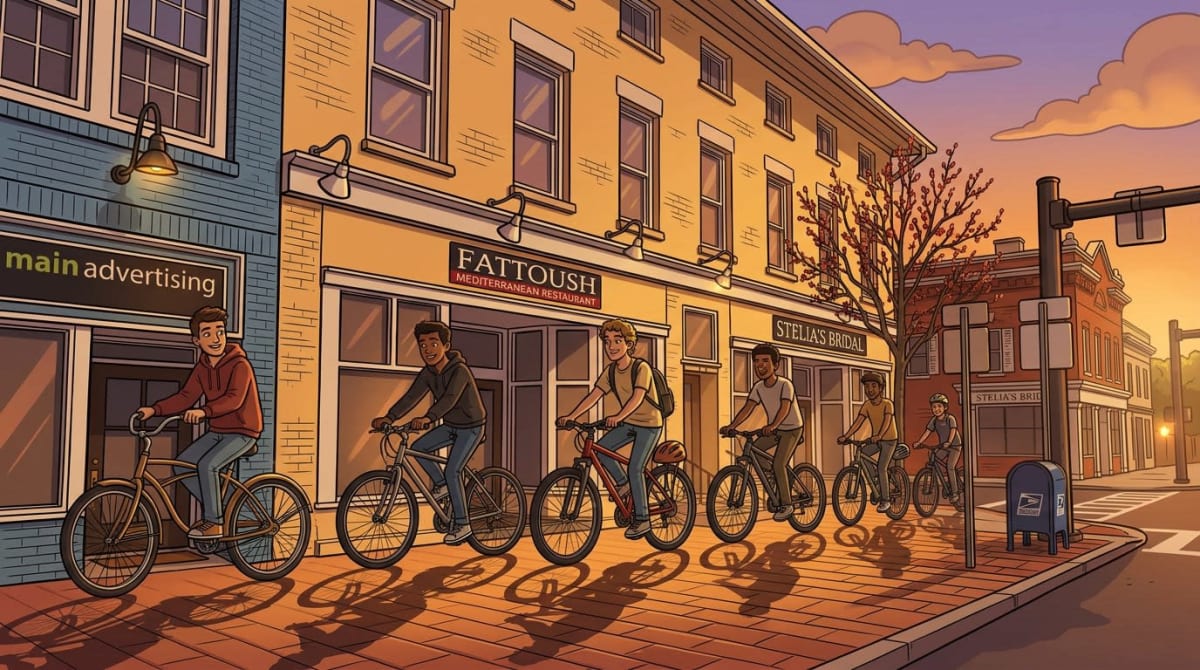
Long before anyone drafted the Pittsford sidewalk bike law now sitting in front of the Board of Trustees, the village had this fight once already. In June of 1894, seven young men were arrested in the Village of Pittsford for riding their bicycles on the sidewalk. They were arraigned before Judge Charles True, pleaded not guilty, hired a lawyer named John N. Steele, and walked out discharged when the jury decided the case had not been made.
Four days later, the Village Board rewrote the ordinance. According to the Town of Pittsford Historian's account, the new rule read:
No person riding a bicycle shall approach within ten feet of a person walking or standing upon a walk.
— Village of Pittsford bicycle ordinance, as amended June 26, 1894
Ten feet, or dismount. That was the compromise a village of horse carts and gas lamps arrived at after arresting seven teenagers.
The draft now in front of the Board asks for fifty.
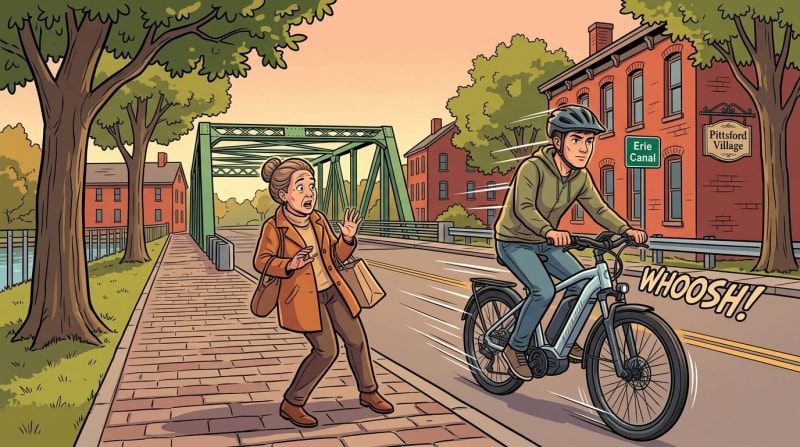
That is not a gotcha. It is the measure of how much has changed — and almost none of the change is on the sidewalk itself. In 1894 the fastest thing on that walk was a young man on a safety bicycle. Today it can be a machine with a 750-watt motor doing twenty miles an hour without anyone pedaling. But the far bigger change happened on the other side of the curb. The road beside that sidewalk in 1894 was unpaved and full of horses. Today it is a state road moving commuter traffic through the middle of a village. Both sides of the curb got more dangerous. This ordinance governs one of them.
The Village has been working on this since the fall of 2025. It has held a public hearing, tabled the vote, and rewritten the draft at least once. That is not dysfunction. That is a small board taking a hard question seriously. But it does mean that most residents have no clear idea what is actually in the document. So here it is.
What the Pittsford Sidewalk Bike Law Would Actually Change
What the Pittsford Sidewalk Bike Law Would Actually Change
The following excerpts are quoted from the draft local law modifying Chapter 176 of the Code of the Village of Pittsford, dated June 23, 2026, as posted by the Village on its Currently Proposed Local Law page.
Start with the piece that generated the headlines. The draft would write electric bikes and electric scooters into Village code for the first time, and then bar them from sidewalks entirely.
Worth knowing before anyone gets angry about it: this is not the Village inventing a rule. Under state law, e-bikes and e-scooters are already barred from sidewalks statewide. The New York State DMV puts it plainly — you cannot operate these devices on a sidewalk except as authorized by local law or ordinance, and municipalities may further regulate the time, place, and manner of their operation. Silence from Pittsford has been the only thing making it ambiguous. Writing it into Chapter 176 makes it locally enforceable by a local officer rather than a theoretical matter of state law.
The genuinely new material is what applies to ordinary, unpowered bikes — plus skateboards, scooters, and roller skates, which the draft groups together as "non-motorized wheeled devices."
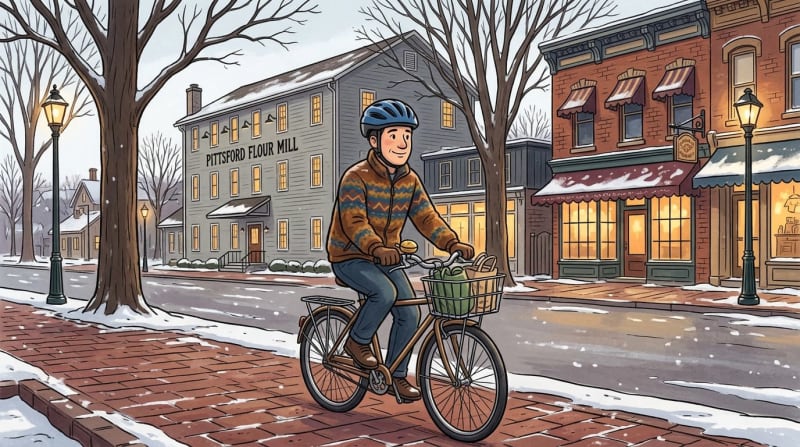
A helmet to ride on the sidewalk. Note that the clause cross-references state law rather than setting its own age threshold, and New York currently requires helmets for riders under fourteen — so how broadly this lands is one of the details still worth asking the Board about. The bell provision is clearer: not merely a duty to call out when passing, but a requirement that you be carrying something capable of making the sound.
There is a small, warm irony here that is easy to miss. After its Bike Safety Jamboree this spring, the Village offered free bike bells to residents under sixteen, while supplies last, at Village Hall. The law and the giveaway are the same idea arriving from two different directions.
Then comes the provision that will surprise people most.
Fifty feet is roughly four car lengths. On the residential streets where riding would still be allowed, it is a workable rule most of the time. It also means that the moment you come within sight of a neighbor on the same block, you are getting off your bike.
And the penalty:
One hundred dollars, with no reduced rate for a first offense, and the possibility that an e-bike is taken. The draft also widens who may enforce it: police, code enforcement, the parking enforcement officer, any member of the Department of Public Works, or anyone else the Board designates.
What Is Not Changing

What Is Not Changing
This is the part that gets lost, and it matters, because a lot of what reads as new has been Village law for years.
Pedestrians already have the right-of-way on Village sidewalks. Riders are already required to give an audible signal before passing someone. Lights or reflective equipment are already required from a half hour after sunset to a half hour before sunrise. All of that sits in the current Chapter 176 today.
The towpath rule is not new either. Riding between the Main Street bridge and the State Street bridge has required dismounting since the Board amended the code in October 2020.
So the honest summary is narrower than the headlines suggested. The draft adds a helmet requirement, a carried-bell requirement, a specific lighting standard, the fifty-foot separation, the dismount districts, and a defined penalty. Everything else is tightening language around rules that already exist.
The national backdrop is real. The U.S. Consumer Product Safety Commission estimates that emergency department visits tied to e-bikes, e-scooters, and hoverboards rose from 37,300 in 2017 to 149,100 in 2024, and that e-bike visits alone reached 59,200 in 2024 — thirty-eight percent of the entire eight-year total in a single year. Something genuinely did change, and it changed fast.
The harder question is whether the thing that changed is the sidewalk, or everything around it.
The Streets Changed More Than the Sidewalks Did

The Streets Changed More Than the Sidewalks Did
The sidewalks around Pittsford are roughly the same width they were in 1894. What runs beside it is not remotely the same thing.
When those seven wheelmen were hauled in front of Judge Charles True, Village streets were not yet paved. According to the village history compiled by former Mayor Bob Corby, Pittsford's main streets were not surfaced in brick until 1916, and not paved in asphalt until the 1920s. The traffic was horses, wagons, and carriages moving at a trot. A collision in the road in 1894 was frightening and could badly hurt you. It was not, as a rule, the same category of event as what happens now.
Today three state roads cross this village. That is not a complaint, it is the physical fact Trustee Wilkes named when he asked Albany for bike lanes. The roads through the middle of Pittsford are engineered to move vehicles through it.
Here is what that means in practice, and it is worth saying without softening. In 2023, 1,166 bicyclists were killed in crashes with motor vehicles in the United States, a four percent increase over the 1,117 killed in 2022, with an estimated 49,989 more injured. Cyclist deaths in this country have been at or near record levels. And according to federal crash data, pedestrians, cyclists and other people outside vehicles went from under eighteen percent of American traffic deaths in 2014 to nearly twenty-two percent in 2023 — nonmotorist deaths rose more than fifty percent over that decade, roughly twice the rate of traffic deaths overall.
The mechanism is speed, and the numbers are brutal and well established. The AAA Foundation for Traffic Safety found that for a person on foot struck by a car, the average risk of death reaches ten percent at an impact speed of 23 mph, twenty-five percent at 32 mph, and fifty percent at 42 mph.
Those figures are for pedestrians rather than cyclists, and a bicycle changes the geometry of a crash. But the physics underneath does not care much which one you were: a human body outside a vehicle, struck by one, at speed. A carriage horse at a trot did not put anyone on that curve.
This is why "just ride in the street" is not a neutral instruction here, and why the people asking for it are careful about how they say it. Wilkes is right that a well-designed road is a safer place for a bicycle than a crowded sidewalk. That is genuinely what the research shows. The condition doing the work in that sentence is well-designed — and a state road carrying commuter traffic through a village center is not that.
So the village is holding two true things at once. Sidewalks belong to people on foot. And the streets, as currently designed, are a deadly place to put anyone on a bicycle. Neither of those is going to stop being true because an ordinance passes.
That tension is sharpest in one specific place — the few blocks where the draft would not let you ride at all.
Where the Rules Bite Hardest: Main Street and Schoen Place
Where the Rules Bite Hardest: Main Street and Schoen Place
The draft names three zoning districts where you must get off and walk, no exceptions:
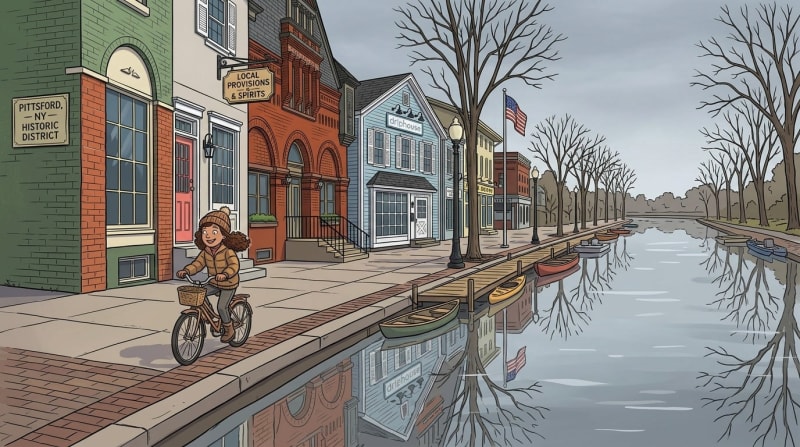
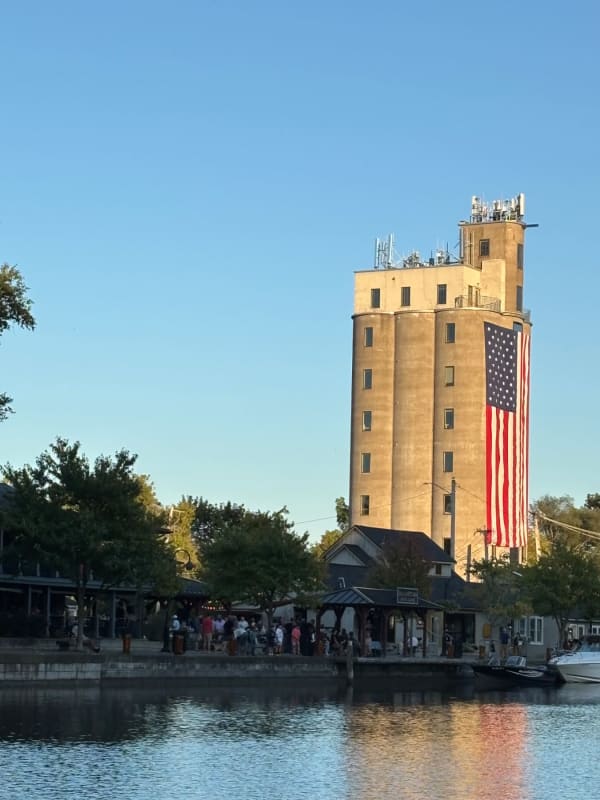
Three acronyms, but really two places. VCB is the Village Center Business district — the shops. TDD is an overlay sitting on top of VCB, adding design standards to the same ground. And MU-EC is Mixed Use Erie Canal, the district written to preserve the character of the canal frontage, which is to say Schoen Place and Northfield Common.
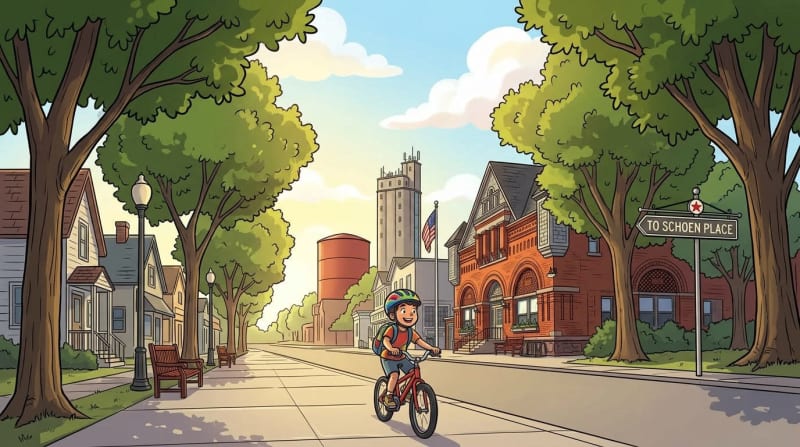
Translated out of code: the dismount zone is Main Street and the canal. It is where the ice cream is, where the coffee is, where the boats tie up, and where a nine-year-old is most likely to be riding somewhere on purpose.
That is also, not coincidentally, where nearly everyone is walking.
Here is the complication nobody's messaging fully accounts for. In the CPSC's 2024 follow-up study of e-bike injuries, fifty-eight percent happened on paved roads and nineteen percent on paved sidewalks. Twenty-four percent involved a motor vehicle. The sidewalk is where the pedestrian conflict lives, but the road is where riders are actually getting hurt.
Which raises the question the Village has been circling for nine months: if you move riders off the sidewalk, where exactly are you moving them to?
Why This Is Still Sitting There
Why This Is Still Sitting There
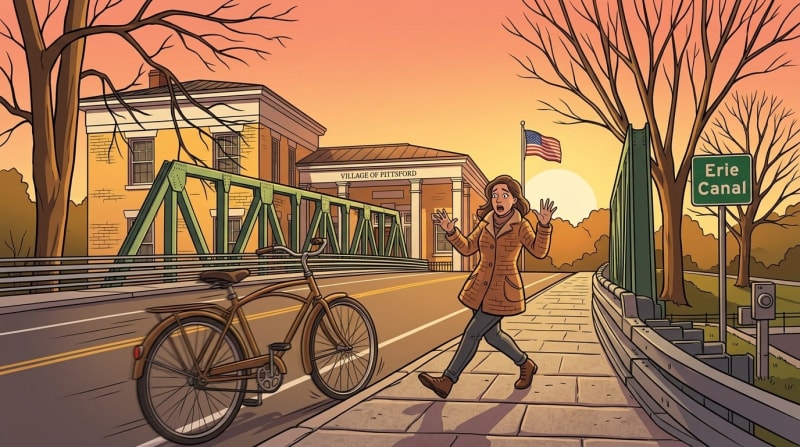
The first version of this law would have banned sidewalk riding for anyone over the age of twelve. It went to a public hearing on February 10, and the Board sat through more than two hours of comment. The age cutoff is gone from the June draft.
Trustee David Wilkes, who introduced the bill, is a road cyclist of long standing, and has been consistent about what he thinks the law is for. Speaking to WHEC in March, he described the arrival of e-bikes and e-scooters capable of twenty-plus miles an hour, and what happens when one of them meets a person on foot. In the same interview he made a direct appeal to the state: the Village would love bike lanes on the three state roads that cross it, and would love the funding to build them.
Mayor Alysa Plummer told WROC in February that she has been struck twice by bicycles while on a Village sidewalk, and described a conceptual design for bike boulevards on the side streets the Village actually owns — safer, she said, than the county and state roads running through the middle of town.
Read those two together and the shape of the problem is clear. Nobody on the Board is anti-bicycle. The people pushing hardest for this law are cyclists. What they are describing is a village whose main streets belong to the State of New York, whose sidewalks are the only comfortable place left to ride, and whose pedestrians are paying for that arrangement.
The Board tabled the vote rather than pass it, and five months later the revised draft is still sitting on the Village's proposed-law page. That is worth reading generously. They declined to pass something they were not finished thinking about.
The Other Half of the Answer
The Other Half of the Answer
On Tuesday, July 28, the Board of Trustees takes up an agenda item titled "Traffic Calming and Bike Boulevards." The packet behind it is not new material — it is three pages lifted from the Village's own Comprehensive Plan, under the heading "Network of Walkable, Connected Neighborhoods & Streets."
Those pages commit the Village, on paper, to creating a bike master plan, to enforcing its Complete Streets policy through the code and development review, to increasing crosswalk visibility, to restructuring the North Main Street bridge lanes for pedestrian safety, and to adding crosswalks where connectivity is missing. Some of those items are marked as zero-to-two-year actions. The plan was adopted in 2019.
One more number from the CPSC study, because it belongs to both halves of this conversation: fifteen percent of e-bike-related emergency visits in 2024 were people who were struck by one. Not riders. Bystanders. That is the pedestrian case, and it is not imaginary.
But the rest of that chart is riders. Which is the whole argument in one image — this is not bikes versus people. It is a village with nowhere good to put a bicycle, trying to solve it one ordinance at a time.
The sidewalk law and the bike boulevards are not competing proposals. They are two halves of the same answer, and only one of them has been moving.
How to Weigh In
How to Weigh In
As of this writing, the Village's upcoming public hearings page lists nothing for the current draft. The law sits on the Village's Currently Proposed Local Law page, revised and waiting. The 2026 enacted local laws list contains exactly one entry, and this is not it.
Tuesday's workshop is open. The Board of Trustees meets July 28 at Village Hall, 21 North Main Street, with the bill payment meeting at noon and the workshop following at 12:15. Meetings are streamed, and the Village posts the videoconference link with each agenda. Written comment goes to the Village Clerk at villageclerk@villageofpittsfordny.gov, or you can walk it into Village Hall.
If you want to read the thing yourself rather than take my summary of it, the draft is posted and it is five pages. That is a twenty-minute investment in a rule you will live under.
What would it take for you to feel safe letting your kid ride to Schoen Place on the street?
That is the actual question underneath all of this, and the answer to it is not written in Chapter 176. It is written in curb lines, crosswalk paint, bump-outs, and speed. The 1894 board could only argue about how far a bicycle should stay from a pedestrian, because in 1894 the road was the only other option and it was full of horses. We have more choices than they did. What we have not yet done is make them.
Content ID: meXOaLc9EvuJOhld798AFd0r
See an error? Tell us.


73 Comments
Comment from Facebook
Regardless of any changes, will they mean anything without enforcement? As it stands now, the speed limit for motor vehicles currently goes largely unenforced. 10 feet or 50 feet... I'll bet the last arrest was indeed those 7 kids in 1894. What would be the penalty for infringement today? Is any action currently taken for e-bikes and scooters on the sidewalks? What about the maximum speed limit for all trail users of 15 mph? I've had people fly by me on the canal path much faster than that. For reasonable enforcement to work as a deterrent, well, there needs to be some. Without it, it's all nice window dressing and useful in litigation God forbid anyone get hurt.
Jul 27, 2026 at 12:48 am
View on Facebook ↗Adam Stetzer
Stephen Ransom Great points! Thanks for the comments. There has been some recent enforcement activity by the Sherrif. I believe the details are in one of the recent Trustee Meeting minutes.
Jul 27, 2026 at 10:50 am
View on Facebook ↗Comment from Facebook
Stephen Ransom speed cameras on the canal path...I can see it. Sounds just like a Pittsford thing.
Jul 27, 2026 at 5:17 pm
View on Facebook ↗Comment from Facebook
Krs Alan nah… I don’t see that extreme there. Plus, it’s a state domain.
Jul 27, 2026 at 5:28 pm
View on Facebook ↗Comment from Facebook
I ebike everywhere! Mendon park trails are a lot of fun. Perinton trail crescent trail system is better. I operate my ebike any where my white American ass wants too! My country, my life!
Jul 27, 2026 at 10:47 am
View on Facebook ↗Comment from Facebook
It's almost as if nobody has ever solved this dynamic of hierarchy of road users .
Jul 27, 2026 at 10:54 am
View on Facebook ↗Adam Stetzer
Ha, you'd think after centuries of shared roads we'd have cracked the code by now! And yet here we are, still figuring out how neighbors can actually see and respect each other out there. Maybe the answer starts closer to home — in conversations like this one.
Jul 28, 2026 at 2:20 am
View on Facebook ↗Comment from Facebook
Thanks for this information!
Jul 27, 2026 at 11:14 am
View on Facebook ↗Adam Stetzer
You are very welcome. It was awesome to see how many people shared their feedback with the Trustees on the proposed bike legislation. Mindful civic engagement makes our community stronger!
Jul 27, 2026 at 12:58 pm
View on Facebook ↗Comment from Facebook
this is such a great FB page. the AI images make people see it / read it and the writing style of goes down smooth. good job keeping folks engaged!
Jul 27, 2026 at 11:54 am
View on Facebook ↗Adam Stetzer
Stephanie Pagano Thank you Stephanie! We are trying to keep what can sometimes be boring content fun and engaging to help build positive community! :-)
Jul 27, 2026 at 1:00 pm
View on Facebook ↗Comment from Facebook
Stella’s bridal moved?
Jul 27, 2026 at 12:15 pm
View on Facebook ↗Comment from Facebook
Many cyclists in the area. Protect the rights of the cyclists without stupid laws. Cyclists are respectful of others
Jul 27, 2026 at 1:20 pm
View on Facebook ↗Comment from Facebook
Stu Barry Stu, I agree, but this is about potentially hazardous sidewalk traffic, not cyclists on the roads.
Jul 27, 2026 at 1:44 pm
View on Facebook ↗Comment from Facebook
Stephen Ransom Many cyclists bike through Pittsford Village, especially to access the canal. Children on bikes should be allowed to bike on sidewalks. It's safer for them.
Jul 28, 2026 at 8:26 pm
View on Facebook ↗Comment from Facebook
Joanne Katzman sure… just safely… for everyone
Jul 29, 2026 at 1:33 am
View on Facebook ↗Comment from Facebook
Stu Barry absolutely! We should be able to use the roads just like a car!
Jul 29, 2026 at 2:57 pm
View on Facebook ↗Comment from Facebook
Laws, Laws.. How will anything be enforced? Make a fenced lane on the sidewalk for bikes only. Keep pedestrians and cyclists safe. 50 ft? I dont think so...
Jul 27, 2026 at 1:25 pm
View on Facebook ↗Comment from Facebook
50 ft from the sidewalk ? Wouldn't that be the middle of the opposite lane of traffic.lol
Jul 27, 2026 at 1:46 pm
View on Facebook ↗Adam Stetzer
Ha, you caught that! Sounds like someone might need to double-check their measurements before they start setting up shop in oncoming traffic 😄 Good eye — the details really do matter when we're talking about our shared spaces here in the village!
Jul 28, 2026 at 2:20 am
View on Facebook ↗Comment from Facebook
I haven't read it recently but i think it indicated 50' from pedestrians while both parties are on the sidewalk. The current form is like that but 10' away - either way, bikes and pedestrians can't really pass each other - it just gives a different amount of space before folks can be like "hey, you in the bike, please back off, you're going to hit me" and have regulatory backing for it.
Jul 28, 2026 at 5:47 pm
View on Facebook ↗Comment from Facebook
Brendan Stevenson and that's understandable ..the way it was written left some details to be ....worked out. 50 ft still seems unrealistic on a tight village sidewalk.
Jul 29, 2026 at 1:05 pm
View on Facebook ↗Comment from Facebook
As long as cyclist stay away from store fronts and outdoor seating there is no reason for greater regulation. My kids ride with me in the Village. We stick to sidewalks except between Church Street and Schoen Place. Seems to work out just fine.
Jul 27, 2026 at 1:57 pm
View on Facebook ↗Adam Stetzer
That sounds like a really thoughtful approach your family has worked out — and honestly, that kind of organic, neighbor-by-neighbor awareness is what makes the Village feel like a real community rather than just a set of rules. Love that you're out there riding with your kids! 🚲
Jul 28, 2026 at 2:19 am
View on Facebook ↗Comment from Facebook
I think there’s a reasonable solution that protects pedestrians without forcing cyclists into the middle of a dangerous road. Pittsford’s current code already requires cyclists to yield to pedestrians and give an audible warning before passing. Instead of this fifty-foot rule, why not strengthen what we already have? Require cyclists to use a bell or call out before passing, slow down to no more than 5 mph, and leave at least three feet between themselves and the pedestrian. If there isn’t enough room to pass safely, they stop, wait or get off the bike. They should also be required to slow to walking speed near driveways, intersections, business entrances and crowded areas. Other communities already use rules like these. Hoboken limits bikes on sidewalks to walking speed, Tempe requires cyclists to slow to 5 mph when passing pedestrians, and places such as Olean and Islip allow sidewalk riding outside designated business districts as long as cyclists yield and give a warning. I’m fine with keeping e-bikes and motorized scooters off the sidewalks. But for regular bicycles, the law should address unsafe behavior instead of forcing someone into traffic because a pedestrian happens to be somewhere within fifty feet. That protects pedestrians, gives cyclists a safer option and creates rules that can actually be understood and enforced.
Jul 27, 2026 at 6:09 pm
View on Facebook ↗Adam Stetzer
This is exactly the kind of thoughtful, solution-focused contribution that makes this conversation worth having — thank you for doing the research and bringing real examples from other communities. The idea of addressing the *behavior* rather than simply displacing cyclists into traffic feels like it honors both pedestrian safety and practical reality. I'd love to see this framing make its way into the actual policy discussion with village leaders.
Jul 28, 2026 at 2:19 am
View on Facebook ↗Comment from Facebook
Chris Tartaglia all solid points, Chris.
Jul 28, 2026 at 9:33 pm
View on Facebook ↗Comment from Facebook
Chris Tartaglia The regulations oll the communities you cite have one consistency: keep doing what has always worked for non-motorized bikes, and recognize that motorized bikes are the problem and should be relegated to the street. The only reason Pittsford is having the conversation is because of the advent of motorized bikes.
Aug 2, 2026 at 1:45 pm
View on Facebook ↗Comment from Facebook
David Pintovery solid point David. You are right.
Aug 2, 2026 at 2:12 pm
View on Facebook ↗Adam Stetzer
Thanks for your comments. But that is not exactly the entire story. These has been concern about regular bikes on sidewalks. Originally, it was proposed that NO BIKES could be on the sidewalks (except maybe young children). But the community pushed back hard on that - which is why we have landed where we are now.
Aug 2, 2026 at 6:03 pm
View on Facebook ↗Comment from Facebook
I’ve biked through there almost every week for years. The roads are excellent for cyclists and bicycles in my opinion. A side walk should be only for walking. If it has wheels, it should be in the road.
Jul 27, 2026 at 7:17 pm
View on Facebook ↗Comment from Facebook
Rick F'in Dalton I completely agree. E bikes especially belong on the road as they are motor vehicles.
Jul 27, 2026 at 11:28 pm
View on Facebook ↗Comment from Facebook
Ellen DeLaire And people should be licensed to use them on the road. Far too many are not aware or simply do not follow road rules.
Jul 28, 2026 at 12:20 am
View on Facebook ↗Comment from Facebook
Laugh if you will, Dave, but I’ve seen some ridiculous people on e-bikes where they don’t belong on the roads, hazardous to themselves and others and many times kids who aren’t old enough to operate a motorized vehicle on a road with traffic. Something happens and then someone is hurt or dead and someone else gets sued. It IS a problem whether you see it or not.
Jul 28, 2026 at 1:26 pm
View on Facebook ↗Comment from Facebook
Not sure I want to see these motorized vehicles on the TFP walking trail either🤯😱😰
Jul 27, 2026 at 9:06 pm
View on Facebook ↗Comment from Facebook
Vicki Bellis-Brouk yes. There are signs stating no motor vehicles allowed. E bikes are motor vehicles therefore should not be on the trails.
Jul 27, 2026 at 11:32 pm
View on Facebook ↗William Bayer
I am a bicyclist and feel mounted bicycles don’t belong on Pittsford’s city center. We should be allowed to ride on the street, however, as in that circumstance we are generally only risking our own health. Hopefully Pittsford will continue to become more bike friendly.
Jul 27, 2026 at 10:01 pm
Comment from Facebook
Big fan of Stelia’s bridal!
Jul 27, 2026 at 10:53 pm
View on Facebook ↗Adam Stetzer
What a gem Stelia's is for our village! There's something special about finding a bridal shop right here in Pittsford where the folks behind the counter truly care. Thanks for sharing the love! 💛
Jul 28, 2026 at 1:34 am
View on Facebook ↗Comment from Facebook
This summer, seeing a significant increase in motorbike activity in village, surrounding 64 and on trails. Usually no helmets and sometimes right by pedestrians.
Jul 28, 2026 at 12:56 am
View on Facebook ↗Adam Stetzer
Thank you for bringing this to our attention — this is exactly the kind of observation that helps us look out for one another here. This is also exactly why our Trustees have been working hard on the issue.
Jul 28, 2026 at 1:36 am
View on Facebook ↗Comment from Facebook
While I appreciate S.J's observation, it doesn't mean that we should penalize the many for the actions of the few. Whether its a regular bike, or road racer bikers wearing biker speedo shorts, no helmet or helmet, all class 1 or 2 e-bikes -- they are "bikes" that should be allowed on every street as long as they follow safety and respect for others using the roads. In addition, most walkers in the village and even other Bikers are capable enough to educate other bikers to use more caution or slow down, or walk their bike on an congested Path area (such as on schoen place). Lately there has been this recent nonsense about proposing that it should no longer be permissible to ride an e-bike on a 40 MPH Road since there is an assumption that an E-Bike can do more damage than a regular bike and that e-bikes should not be on roads that have a 40 MPH speed limit -- well that's just downright crazy thinking. Most e-bikes cant even go that fast (and even straight downhill it would be tough to go 40!) Furthermore, Main Street and East Ave have (to and fro) have multiple speed limit sign changes therefore it's ludicrous to expect an E-Biker to get off their bike to walk it through the 40 MPH zones until they get to a 30 MPH zone. In addition, it's a fact that a car driver would do more damage that an E-Bike, so should we just say No More Cars allowed on this stretch of roads? Lastly, there are plenty of bikers who ride in tight wide groups as almost professional looking bike riders on skinny tire road racer type bikes who can go faster than an e-bike category 1 or category 2. We in Monroe County and the various villages should not allow in infringement on using a Bike or an E-Bike if the majority of us use common sense while riding on a 30 MPH road, or a 40 MPH road, or a 20 MPH road. Biking and E-Biking and even Scootering are not activities that are going away, therefore we need to embrace it - not make it punitive or difficult to do. Don't penalize the masses for the actions of the few who are disrespectful of the roadways.
Aug 1, 2026 at 3:06 pm
View on Facebook ↗Comment from Facebook
Well I didn't mention it for no reason. I have seen them there. Again I suppose it's about enforcing .
Jul 28, 2026 at 1:30 am
View on Facebook ↗Comment from Facebook
Lol
Jul 28, 2026 at 1:50 am
View on Facebook ↗Comment from Facebook
The village can’t enforce current vehicle and traffic laws. How are they going to enforce new bicycle laws? Many driver speed through the village and don’t stop for pedestrians and cyclists crossing the street from the Canal path across to Schoen Place. Improve your bicycle infrastructure and enforce current laws and you might be able to get people off of the sidewalks with their bicycles altogether.
Jul 28, 2026 at 2:35 am
View on Facebook ↗Adam Stetzer
So so true! Thank you! Please see our piece on the very real traffic dangers in the Village: https://pittsfordvillage.com/pittsford-traffic-calming
Jul 28, 2026 at 2:44 am
View on Facebook ↗Comment from Facebook
I think asking E bikes to stay on the road is OK however I think that we should not be expecting anyone under 18, riding a normal bike to ride in the road with cars. I want my 13 year-old to continue to ride into the village and have some autonomy and continue to independently. Go to the orthodontist and get frozen yogurt and meet up with friends without worrying that they are going to be riding in the road and potentially hit by a car.
Jul 28, 2026 at 4:24 pm
View on Facebook ↗Adam Stetzer
This is such a meaningful point, and honestly it gets at the heart of what we all want — kids who can move through this village with freedom and confidence. The image of your 13-year-old biking to the orthodontist and grabbing frozen yogurt independently is exactly the kind of community life worth protecting. That distinction between e-bikes and younger kids on regular bikes has been getting serious attention as this policy evolves.
Jul 28, 2026 at 5:10 pm
View on Facebook ↗Comment from Facebook
Pittsford Village Chat please stop using generative AI. Your image and your responses reek of it.
Jul 29, 2026 at 5:13 pm
View on Facebook ↗Adam Stetzer
Fair pushback, and I hear you. But I'm Adam — a real person who lives here and genuinely cares about this community. I live on Monroe Ave on the canal, do Yoga 4 times a week at Breathe (for 4 years), and go to many of the board meetings in person. My wife served as a Trustee for 4 years, and I'm currently an alternate on the PBZA. I'm happy to grab coffee at VBC any time if you want to discuss any of this and/or the mission here.
Jul 29, 2026 at 5:43 pm
View on Facebook ↗Comment from Facebook
Okay, I get the independence thing, it was important to me when I was growing up in the dark ages of the 60s. However, bike to the the village, have the village put up a bunch of bike racks, teach your children to lock up their bikes, and have them walk through the village to the orthodontist, yogurt store, etc. E-bikes don't belong on a pedestrian walkway, bikes can be walked through the village if necessary. That way the kids have their independence and pedestrians are safe. Walking it good for you.
Aug 1, 2026 at 5:28 pm
View on Facebook ↗Comment from Facebook
Susan Kennedy so where do we make the no bike riding sidewalk line? My 13-year-old takes a sidewalk for 2 miles from our house to the village. Where exactly do they walk their bike versus riding their bike and who decides?
Aug 5, 2026 at 1:07 am
View on Facebook ↗Comment from Facebook
Of course they can just walk their bikes through the busy areas - they just can’t ride them. That would solve the problem with e bikes, scooters - they just can’t ride them
Jul 28, 2026 at 5:38 pm
View on Facebook ↗Comment from Facebook
Christine Norton I'm a cyclist and I agree. It's reasonable to ask cyclists to walk their bikes on busy sidewalks.
Jul 28, 2026 at 8:29 pm
View on Facebook ↗Comment from Facebook
It seems walking your bikes in the village is safer for pedestrians, bikers, dogs on leash, and yes, even drivers. It's the rule on the canal path in the village, keep the rules consistent!
Jul 28, 2026 at 9:14 pm
View on Facebook ↗Comment from Facebook
Cycling is not going away, keep up with times and create bike lanes.
Jul 28, 2026 at 11:37 pm
View on Facebook ↗Adam Stetzer
You're absolutely right that cycling is here to stay — and that's a conversation worth having together as a community. Bike lanes are on the table in many neighboring areas, and Pittsford could be part of shaping what that looks like here. We'd love to hear more about what you'd want to see — your voice matters in how this village evolves.
Jul 29, 2026 at 12:52 am
View on Facebook ↗Comment from Facebook
Yes, it is the rule on a Canal path, unfortunately, even adults disregard the rule and even when they are confronted. They just keep on riding. 
Jul 29, 2026 at 12:06 pm
View on Facebook ↗Comment from Facebook
I ride an ebike, I always put pedestrian safety first, and when it comes to spaces with no pedestrians and many motor vehicles, I put MY safety first.
Jul 29, 2026 at 12:40 pm
View on Facebook ↗Comment from Facebook
My house has the Auburn Trail adjacent. The E bikes very often at 15 to 35 mph on the trail. This is unfortunate, there are many young families walking with their kids and some with strollers. Retired people love this stretch and take leisurely walks. Someone is going to get run over before anything drastic really happens, unfortunately that’s what I believe.
Jul 29, 2026 at 4:46 pm
View on Facebook ↗Comment from Facebook
Is putting a bike lane in a possible solution?
Jul 29, 2026 at 5:43 pm
View on Facebook ↗Adam Stetzer
https://pittsfordvillage.com/pittsford-traffic-calming
Jul 29, 2026 at 5:51 pm
View on Facebook ↗Yvonne Pierce
I am a semi-retired older adult who lives and works within walking distance of Schoen Place and the village. I bike and walk through these areas every day, sometimed early in the morning before there are many pedestrians on the sidewalks or paths. But early morning is when the commuter traffic is the worst, and I will not ride on a busy street even if there is a bike lane and “traffic-calming” features: there are still too many cars and I do not feel safe. I ride on the sidewalk at those times. Very occasionally I will pass a pedestrian and have never had a problem. I slow down and ride as far to one side as possible, using my bell to warn them. The pedestrians also usually take a small step to the other side of the side walk to allow easier passage. A friendly hello and a thank you are usually exchanged. Sometimes I am the pedestrian on the sidewalk and a family, children, teens, or older adults ride past on bikes, and I am always happy to step aside knowing we are ALL much safer on that sidewalk than in the traffic. Many “serious” cyclists seem to ride comfortably and confidently on the road or in the bike lanes, but older and younger folks or anyone who may not handle a bike with the skill of an athlete are much safer on the sidewalks, in my opinion. That being said, even a friend who was an experienced racing cyclist was hit by a distracted driver and spent 6 months in the hospital, (luckily making a full recovery, but never again cycling on a road). Schoen Place canal path is another matter: at peak times it is crowded with pedestrians and the “walk your bike” requirement is important for everyone’s safety. But at 6 am when there are few pedestrians there, I would prefer to ride on the path than dismount and walk when there are few pedestrians around. I have seen signage in coastal communities with multi-use boardwalks that prohibit wheeled traffic during peak pedestrian hours, but allow bikes during the early morning or off peak times.
Jul 30, 2026 at 9:13 am
Comment from Facebook
Bikes should not be on the sidewalk.
Jul 30, 2026 at 2:01 pm
View on Facebook ↗Comment from Facebook
Rode my bike on the sidewalk up north and South Main Street everyday in 4th grade to Lincoln Ave. school in 1954-55.
Jul 30, 2026 at 3:51 pm
View on Facebook ↗Comment from Facebook
Any thought or going into the schools and talking with kids? They have great ideas. Many teachers would welcome the village board. Just an idea.
Jul 30, 2026 at 6:20 pm
View on Facebook ↗Comment from Facebook
Do something about the ebikes before someone gets killed
Jul 31, 2026 at 4:01 pm
View on Facebook ↗Comment from Facebook
I’ve been thinking a lot about how we can make Pittsford safer as our village continues to see more bikes, e-bikes, scooters, pedestrians and vehicle traffic. I’m all for a bike-friendly Pittsford. I also want a village where people can walk safely, our kids can ride, seniors can enjoy the canal, businesses can thrive and drivers don’t feel like they’re navigating an obstacle course. A few ideas worth discussing: • A 20-mph village core, particularly around Schoen Place, Main Street and the canal. • Better crosswalks, lighting, sightlines and traffic calming in areas where we’re seeing conflicts. • Clearly marked bike/e-bike routes so cyclists have safe alternatives to crowded pedestrian areas. • Keeping the busiest canal areas walk-your-bike zones, while providing cyclists with a convenient through route. • Clear and reasonable rules for e-bikes and electric scooters, especially around pedestrians. • A low-speed bike boulevard on appropriate streets, such as South Main, to make biking safer for families and less experienced riders—where motor vehicle speeds are intentionally kept low to prioritize bikes and neighborhood traffic. • Keeping sidewalks accessible for pedestrians, seniors, children and people with disabilities. • More strategically placed bike parking around the canal and Village businesses. • Tracking not just accidents, but near-misses, speeding and dangerous intersections so we can address problems before someone gets hurt. • Trying some changes as a summer pilot program before making them permanent. I think the goal should be simple: Not cars vs. bikes. Not pedestrians vs. cyclists. Just a safer, more enjoyable Pittsford for everyone. We have such a beautiful, walkable village and an incredible canal. Let’s think ahead about how we want Pittsford to evolve while protecting the character that makes people love living here.
Aug 1, 2026 at 11:31 am
View on Facebook ↗Comment from Facebook
Don't penalize the many for the actions of the few. Whether its a regular bike, or road racer bikers wearing biker speedo shorts, no helmet or helmet, all class 1 or 2 e-bikes -- they are "bikes" that should be allowed on every street as long as they follow safety and respect for others using the roads. In addition, most walkers in the village and even other Bikers are capable enough to educate other bikers to use more caution or slow down, or walk their bike on an congested Path area (such as on schoen place). Put up more signs to educate people. Lately there has been this recent nonsense about proposing that it should no longer be permissible to ride an e-bike on a 40 MPH Road since there is an assumption that an E-Bike can do more damage than a regular bike and that e-bikes should not be on roads that have a 40 MPH speed limit -- well that's just downright crazy thinking. Most e-bikes cant even go that fast (and even straight downhill it would be tough to go 40!) Furthermore, Main Street and East Ave have (to and fro) multiple speed limit sign changes therefore it's ludicrous to expect an E-Biker to get off their bike to walk it through the 40 MPH zones (these are long stretches) until they get to a 30 MPH zone. In addition, it's a fact that a car driver would do more damage that an E-Bike, so should we just say No More Cars allowed on this stretch of roads? Lastly, there are plenty of regular bikers who ride in tight wide groups and some as almost professional looking bike riders on skinny tire road racer type bikes who can go faster than an e-bike category 1 or category 2. We in Monroe County and the various villages should not allow in infringement on using a Bike or an E-Bike if the majority of us use common sense while riding on a 30 MPH road, or a 40 MPH road, or a 20 MPH road. Biking and E-Biking and even Scootering are not activities that are going away, therefore we need to embrace it - not make it punitive or difficult to do. Don't penalize the masses for the actions of the few who are disrespectful of the roadways.
Aug 1, 2026 at 3:09 pm
View on Facebook ↗Comment from Facebook
Awww another reason I’d have very interest in hanging out in the village of Pittsford. 🙄
Aug 1, 2026 at 9:29 pm
View on Facebook ↗Comment from Facebook
How would a biker pass a pedestrian while maintaining a 50ft buffer? Maybe the answer is that e-bikes can’t be on sidewalks at all?
Aug 2, 2026 at 1:35 pm
View on Facebook ↗Adam Stetzer
Great question. As I understand the proposed legislation - the 50ft buffer is how far AHEAD on the sidewalk the biker is supposed to dismount. At that point, walking their bike, they are also a pedestrian. Hope that helps clarify what they are considering signing into law.
Aug 2, 2026 at 6:01 pm
View on Facebook ↗Comment from Facebook
It's just not possible to do this in the village. It's just to small, and overcrowded. You can't fit a square in a round hole of the same size. One needs to get more space or shrink.
Aug 2, 2026 at 3:38 pm
View on Facebook ↗Comments marked “from Facebook” were shared from our Facebook page. Commenter names are not published here — open the original thread to see them.
Share with the Community