Town of Pittsford's Road Crew Just Made History: Inside the Town's First-Ever Union
The Short Version
- Town of Pittsford DPW workers formed the first union in the town's 200-year history, represented by AFSCME Council 66, following a July 16, 2026 rally outside Town Hall.
- Despite serving one of Monroe County's wealthiest communities, Town of Pittsford DPW employees are among the lowest-paid public works workers in the county.
- Two DPW workers resigned in the week of the rally, citing low wages — a concrete sign of the retention pressure the Town of Pittsford now faces.
- The workers who rallied describe genuine affection for the community and for each other; their ask is wages that make staying economically viable.
- Residents can weigh in at Town of Pittsford board meetings or by writing to the board as contract negotiations continue.
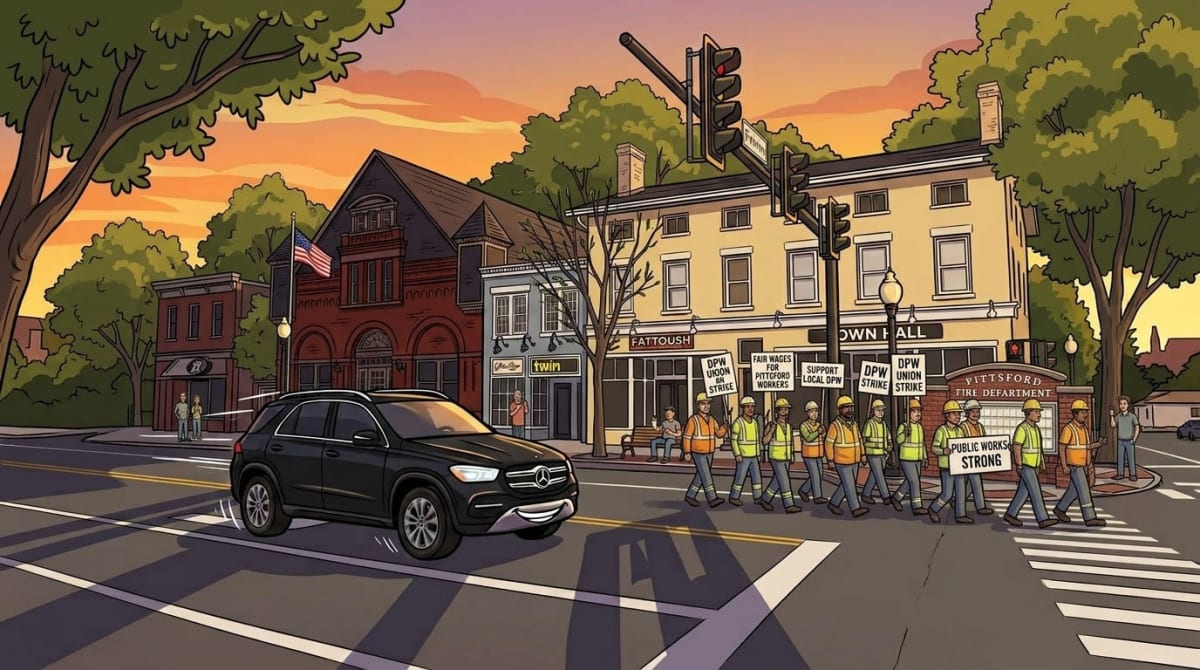
On the morning of July 16, 2026, Town of Pittsford DPW workers — the men and women who plow your streets in the dark hours of a December blizzard — stood together in front of Town Hall and made history. They carried signs. They asked to be seen. According to WNY Labor Today, these Department of Public Works employees, represented by AFSCME Council 66, had formed the first union in the Town of Pittsford's 200-year history. What they were asking for wasn't complicated: wages that match the work.
What Pittsford's DPW Workers Actually Do
What Pittsford's DPW Workers Actually Do
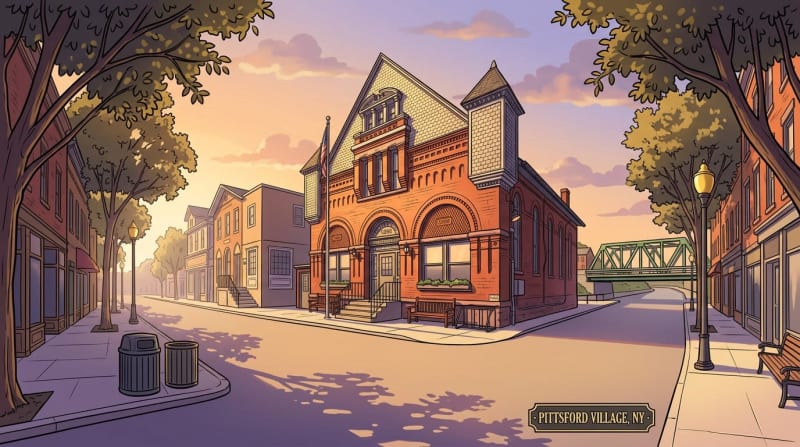
Before any conversation about wages or contracts, it is worth pausing on the work itself. The Town of Pittsford Department of Public Works is the infrastructure that holds this town together. These are the crews clearing roads before sunrise during a February ice storm. They are the ones who respond when a water main breaks at 2 a.m. on a Sunday. They maintain the parks where Pittsford kids play, the stormwater systems that keep basements dry, the roads and sidewalks that give this community the cared-for look that visitors notice the moment they arrive.
This is not seasonal work. Town of Pittsford DPW employees are year-round, essential-services workers whose jobs require physical endurance, mechanical skill, and institutional knowledge — knowing where the old water lines run, how a specific road behaves in a freeze-thaw cycle, which drainage systems need watching when a major storm is coming. The quality of life that defines Pittsford — reliable parks, maintained streets, dependable infrastructure — does not materialize on its own. It materializes because specific people show up, often before the rest of the town is awake, and do hard physical work in all kinds of weather.
That work has been mostly invisible. The rally on July 16 changed that, at least for a day.
Making History: The First Union in 200 Years
Making History: The First Union in 200 Years
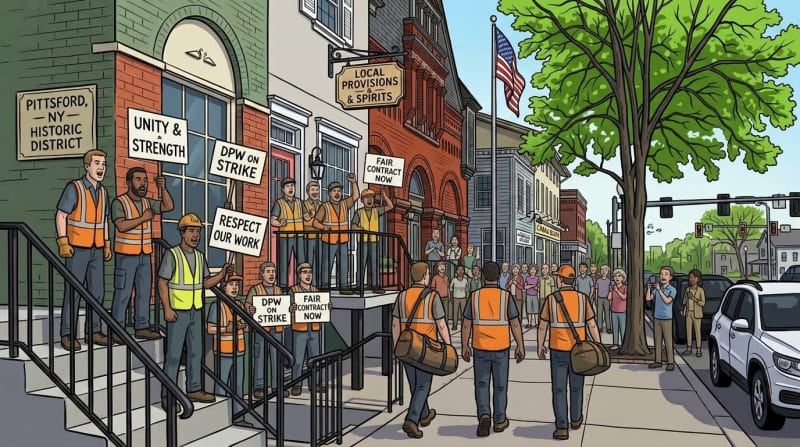
In 200 years of the Town of Pittsford's history, no group of town employees had ever organized into a union. On July 16, 2026, that changed when Town of Pittsford DPW workers represented by AFSCME Council 66 held a public rally outside Town Hall to demand better pay and a fair contract.
AFSCME — the American Federation of State, County and Municipal Employees — is a national public employee union with regional affiliates across the country. Council 66 is the body serving Western New York. Their involvement here signals that Town of Pittsford DPW employees weren't expressing in-the-moment frustration. They went through a formal organizing process, built a representative structure, and earned legal recognition. That takes sustained effort and the kind of conviction that comes from feeling that every other way of being heard has been exhausted.
What prompted the drive? The wages. The retention losses. The recognition that years of good work for this community were not producing compensation that made staying economically viable. When you are doing essential work for a wealthy community and still earning among the lowest public works wages in your county, you eventually face a choice: organize for change, or leave for somewhere that pays more.
Many of them organized. Two, in the week of the rally, chose to leave.
"These Workers are doing the work that keeps Pittsford running, so we believe the wages should be reflective of that work."
— Maria Fisher, AFSCME Council 66 Representative
Among Monroe County's Lowest-Paid — Despite the Zip Code
Among Monroe County's Lowest-Paid — Despite the Zip Code
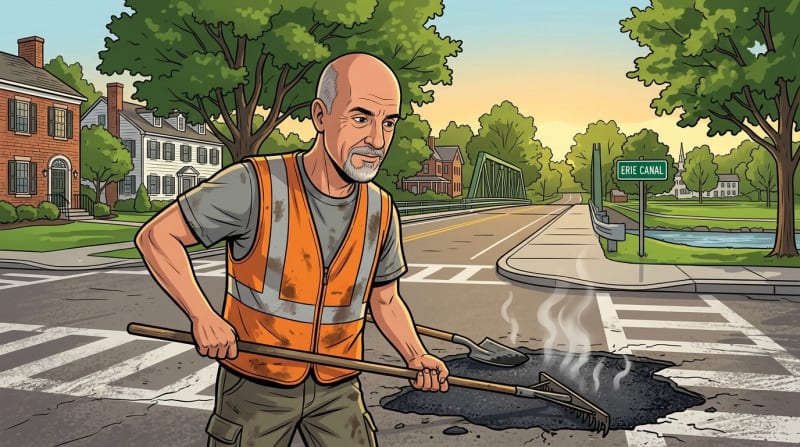
The central claim of the July 16 rally is one that WNY Labor Today puts plainly: Town of Pittsford DPW workers are among the lowest-paid public works employees in Monroe County, despite serving one of the region's wealthiest communities.
The Town of Pittsford is, as the rally coverage itself describes it, a largely wealthy community. The expectations for what the town looks like — maintained parks, clean roads, reliable infrastructure — are high, and they are reliably met. What the rally made visible is that the people meeting those expectations are not sharing in the community's prosperity.
There is a gap between what the Town of Pittsford's resources suggest and what its public works employees bring home. That gap is not abstract. It is the difference between a skilled worker who can build a career in this community and one who takes their experience to a municipality that pays more competitively. In a field where institutional knowledge matters — knowing the vulnerable infrastructure, knowing how to run a storm response as a team — that gap carries real costs, measured in the workers who leave and the expertise that leaves with them.
The Town of Pittsford has the resources to close that gap. Whether it chooses to is the question now on the table.
Two Resignations This Week — The Human Cost
Two Resignations This Week — The Human Cost
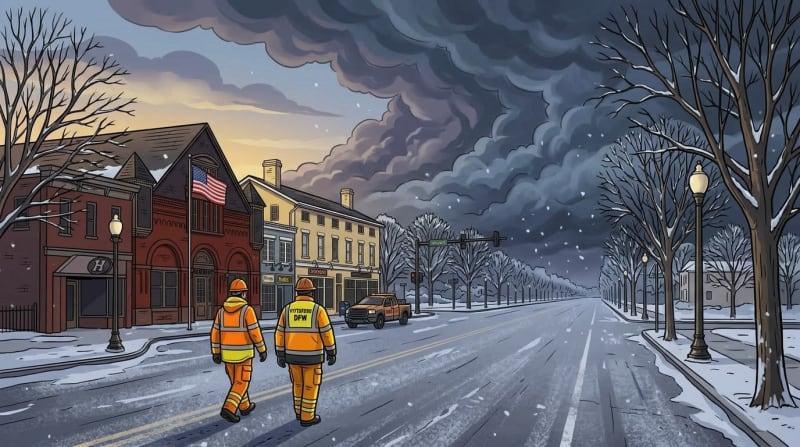
In the week of the July 16 rally, two Town of Pittsford DPW workers resigned. AFSCME Council 66 Representative Maria Fisher cited low wages as the reason.
Two people. In one week. Workers who knew how the roads here were graded, who could read a storm forecast and plan the town's response, who understood what it takes to keep this community's infrastructure running through a Rochester winter. That knowledge walked out the door. The town will spend time and money building it up in replacements — if it can recruit qualified workers willing to accept what the Town of Pittsford currently pays.
The workers who showed up on July 16 did not come out of bitterness. They came because they care about this community and want to keep serving it. Fisher indicated that the team has genuine affection for each other and for Pittsford — the belonging is real. They want to stay. What they are asking for is compensation that makes staying a viable choice for people who have families to support and bills to pay. It is the ask of people who have already demonstrated commitment and are seeking recognition of it.
What does it cost a community when the people who keep it running begin to feel that their dedication isn't acknowledged? And what does it cost when they start to do the math and leave?
What They're Asking For
What They're Asking For
The July 16 rally was a public signal — not the start of the organizing process, but a visible moment in a longer effort. AFSCME Council 66 is in contract negotiations with the Town of Pittsford toward an agreement that reflects the value of DPW work.
Maria Fisher's framing, as reported by WNY Labor Today, is straightforward: the wages should be reflective of that work. Not radical. Not complicated. Just the recognition that essential public services deserve compensation that matches their importance to the community.
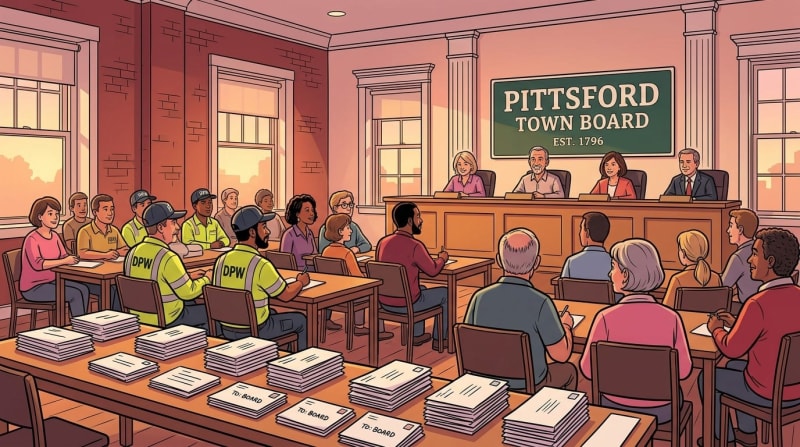
The specifics — wage scales, step increases, benefit terms — are the substance of negotiations now underway. Public employee contract discussions can be slow-moving. What matters in the meantime is that residents know this is happening and understand that they have a voice in it. Town of Pittsford Board meetings are open to the public. The board receives correspondence from residents. When a community signals that how the town treats its workforce matters to the people who live here, that signal carries weight in a negotiation.
Why This Matters to Everyone in Pittsford
Why This Matters to Everyone in Pittsford
Here is the thing about a community that runs well: you can start to believe it runs on its own.
The streets get plowed before you need to drive on them. The parks stay in shape through the season. The stormwater moves. The water comes out of the tap. It happens so consistently that it becomes background — infrastructure so reliable it fades from view, and the people who create that reliability fade with it.
What July 16 did — what Town of Pittsford DPW workers choosing to organize for the first time in 200 years did — is make those people visible. It asked Pittsford to look at the crew that builds and maintains the physical foundation of this community's quality of life and to reckon honestly with what they are and are not receiving in return.
Every community has gifts it relies on without always acknowledging them. In Pittsford, one of the most constant is the daily work of the DPW — essential, often invisible, and performed by people who, by their own account, love this town and the teammates they show up alongside every day. What is being asked now is for the town to reflect that back in the way that matters most practically: wages that make staying here a real option.
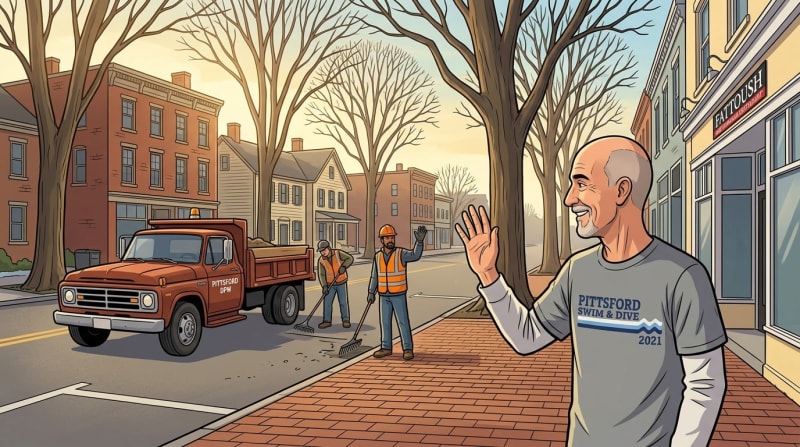
If you want to add your voice, the path is simple. Show up to a Town of Pittsford Board meeting. Write to the board. If you drive past a DPW crew working your street, offer a wave. Small gestures cost nothing and land harder than you might expect with workers who spend a lot of their time unseen.
What kind of community do we want Pittsford to be — not just in how it looks, but in how it treats the people who make it look that way?
Content ID: XiigDEwNz7bPBKki63x4FoZs
See an error? Tell us.

29 Comments
Comment from Facebook
It’s not the whole DPW just the highway department that is unionized -
Jul 24, 2026 at 1:19 pm
View on Facebook ↗Comment from Facebook
Tharaha Thavakumar-Slavin oh my how fast that changes
Jul 25, 2026 at 4:02 am
View on Facebook ↗Adam Stetzer
Great clarification Tharaha! Thank you!
Jul 26, 2026 at 5:11 pm
View on Facebook ↗Comment from Facebook
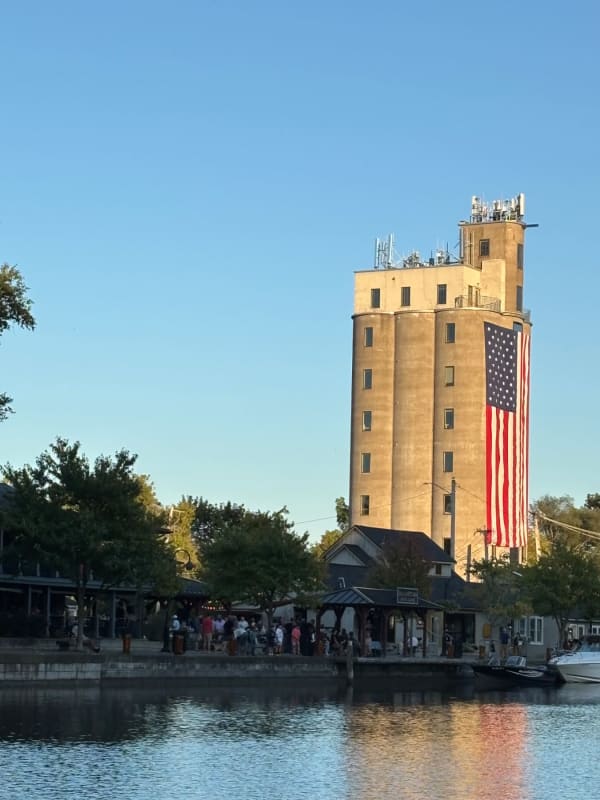
They can’t go on strike like your image says- but here’s a picture from the rally
Jul 24, 2026 at 1:20 pm
View on Facebook ↗Comment from Facebook
Tharaha Thavakumar-Slavin that starting pay for each municipality?
Jul 25, 2026 at 12:56 am
View on Facebook ↗Comment from Facebook
Daniel J Riordan yes for MEOs
Jul 25, 2026 at 3:25 am
View on Facebook ↗Comment from Facebook
Tharaha Thavakumar-Slavin #samejob
Jul 25, 2026 at 2:05 am
View on Facebook ↗Comment from Facebook
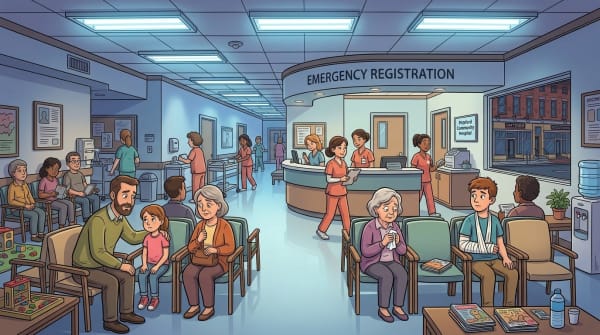
This AI generated mess has spelling mistakes.
Jul 24, 2026 at 6:15 pm
View on Facebook ↗Comment from Facebook
Robert Greendyke And also Mercedes cars don't smile like Lightning McQueen? 😂
Jul 26, 2026 at 12:03 am
View on Facebook ↗Adam Stetzer
Ha, fair catch! I'm still figuring out the best ways to use these tools to spark conversation without losing the human touch — that's the whole point of this space. Happy to meet any time at VBC to discuss better approaches over a coffee. Thanks for keeping me honest, genuinely.
Jul 28, 2026 at 2:06 am
View on Facebook ↗Comment from Facebook
Yay for worker power ! Huge boo to your crap AI art.
Jul 25, 2026 at 1:29 am
View on Facebook ↗Adam Stetzer
Ha, fair point — and noted! We hear you on the AI art, and we appreciate you caring enough to call it out. Real community deserves real creativity, we’re doing the best we can with no budget! 🙌
Jul 28, 2026 at 2:00 am
View on Facebook ↗Comment from Facebook
That’s awsome!! Union strong 💪 now please come show the village of Fairport in the town of Harrington how it’s done!!
Jul 25, 2026 at 3:59 am
View on Facebook ↗Comment from Facebook
Jon Nixon i’m very sorry to hear that, that makes my blood boil. Next time reach out to your desired organization. They can assist you walk you through every step while offering protections against that type of behavior. Not to mention that that’s illegal.
Jul 25, 2026 at 4:09 am
View on Facebook ↗Comment from Facebook
Jon Nixon always remember Taylor Law! Taylor Law! Taylor Law! That is your Bible. New York State, technically  it is illegal for municipality to fire you for organizing I would’ve immediately reached out to the NLRB  and they probably would’ve hooked you up with legal. Usually the most common reason someone’s fired for organizing is because they are actively organizing while on the clock and that is generally frowned upon, and you’re not supposed to do you can discuss union business on the Clock, but you typically can’t actively organize and for. while on company I’ve been a VP for my local union chapter for about 5-6 years 
Jul 25, 2026 at 4:16 am
View on Facebook ↗Comment from Facebook
Michael Loria probably got fired to something else. Let’s be honest.
Jul 25, 2026 at 9:56 am
View on Facebook ↗Comment from Facebook
FACT! Union members are on average 35% more than non-union members FACT! Union members have access too far better health benefits, retirement plans, and job Security than no union members FACT! Union members maintain almost bulletproof, job, Security, and preventative arbitrary for firings than nonunion members ! ORGANIZE!!!!!!!!! 
Jul 25, 2026 at 4:06 am
View on Facebook ↗Comment from Facebook
Michael Loria Fact: Unions bend over backwards to fight for shit employees to keep their jobs when said employees shitty behavior should get them fired. Fact: Unions can legally blatantly lie to members about management to influence their votes, but legally management can do nothing. Fact: Municipal employee Unions give money and support to the same politicians who support them, and somehow its not bribery or money laundering...
Jul 25, 2026 at 2:19 pm
View on Facebook ↗Comment from Facebook
Michael Loria unions protect shitty employees....period! Prove me wrong.
Jul 26, 2026 at 12:42 am
View on Facebook ↗Comment from Facebook
I love the Benz in the pic-very Pittsford.
Jul 25, 2026 at 4:08 pm
View on Facebook ↗Comment from Facebook
Don't use AI... If it's about about people ..
Jul 26, 2026 at 12:01 pm
View on Facebook ↗Adam Stetzer
That's a fair point, we take it seriously. This community is built on real relationships and genuine conversation — not automation. I'm always here as a real person - happy to meet with any other well-intentioned community member at the VBC for coffee any time. I sit at the Village meetings week after week. I had a phone call with the Mayor today. I appreciate you keeping us honest about what that means.
Jul 28, 2026 at 1:59 am
View on Facebook ↗Comment from Facebook
There for a reason, must work together to get things done.
Jul 26, 2026 at 6:44 pm
View on Facebook ↗Adam Stetzer
That's the heart of it, isn't it? When we show up for each other — not just for tasks, but because we genuinely belong to this place together — something real gets built. Pittsford is lucky to have people who feel that sense of shared purpose.
Jul 28, 2026 at 2:04 am
View on Facebook ↗Comment from Facebook
Jim Peterson hey bro were you involved ?
Jul 28, 2026 at 1:51 am
View on Facebook ↗Comment from Facebook
Dan Price no I’m management and my guys in the sewer department aren’t interested, the article has some miss representations. How’s things with you? Lotta work
Jul 28, 2026 at 1:09 pm
View on Facebook ↗Adam Stetzer
Appreciate you sharing your perspective from the ground level — that kind of firsthand knowledge matters. Would love to hear more about what felt misrepresented; getting the full picture from people actually doing the work is how a community conversation stays honest. Sounds like your crew is staying busy — hope the season's treating you all well!
Jul 28, 2026 at 5:09 pm
View on Facebook ↗Comment from Facebook
How much do they make now compared to the other towns? And what does that sign actually mean?
Jul 29, 2026 at 6:46 pm
View on Facebook ↗Comment from Facebook
You may want to verify the information you're sharing and cite your sources. Based on the Pittsford Town Board meeting minutes, two recent hires were brought on at approximately $28 per hour, which equates to about $59,000 annually. Not $48,000 like the sign shows. In comparison, $77,000 per year for the Town of Gates works out to roughly $37 per hour. The most recent wage information I could find for the Town of Gates (from 2022) shows that approximately $37 per hour was the Working Foreman rate, while a Motor Equipment Operator (MEO) started at around $27 per hour or approximately $56,000 annually. Although I'm sure wages have increased since then, it seems unlikely that the starting MEO wage has risen to approximately $37 per hour. Could you please cite the sources you used for your figures?
Jul 30, 2026 at 3:16 am
View on Facebook ↗Comments marked “from Facebook” were shared from our Facebook page. Commenter names are not published here — open the original thread to see them.
Share with the Community