
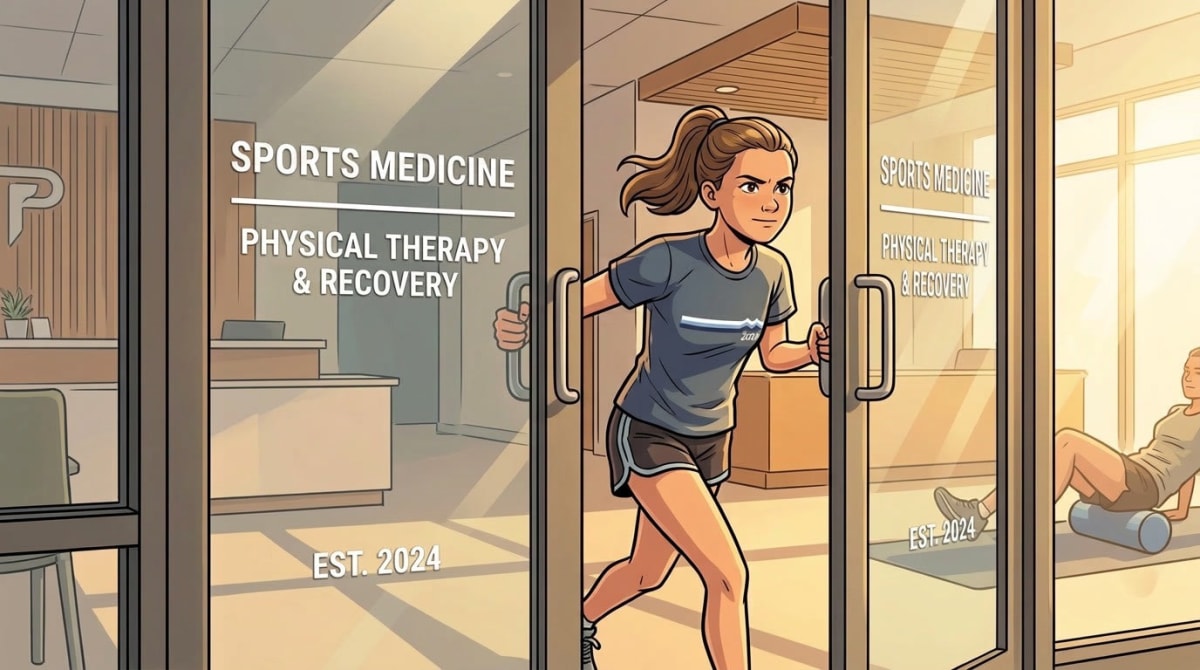
A Pittsford Sutherland Athlete Trains Smarter at UR Medicine's Fitness Science Center
The Short Version
- Pittsford Sutherland junior Presley Imburgia trained at UR Medicine's Fitness Science Center this summer specifically to reduce her ACL injury risk before her lacrosse season.
- Female athletes sustain ACL injuries at two to eight times the rate of male athletes, and women's lacrosse has one of the highest incidence rates of any sport at 0.112 per 1,000 athlete-exposures.
- High-compliance neuromuscular training programs have shown an 88% reduction in ACL injury risk — and peak injury hazard falls squarely in the high school window, ages 16 to 20.
- The UR Medicine program starts with a personalized movement profile before any training begins, identifying risk factors rather than waiting for an injury to reveal them.
- Teams in the program averaged a 13% improvement in athletic performance measures over a school year — the program partners with eight school districts and local universities across the Rochester region.
- Winter and spring sport athletes, including lacrosse players, still have time to start; the center is at the Saunders Center for Orthopaedics and Physical Performance in Henrietta.
Presley Imburgia walked into the UR Medicine Fitness Science Center in June knowing exactly what she wanted to avoid. She had watched the injury patterns in women's lacrosse. The Pittsford Sutherland junior spent her summer there working through data-driven training designed to identify movement risk before it becomes a season-ending injury. She left, by her own account, more confident, more ready, and more prepared for the next level than she had ever been.
What UR Medicine's Fitness Science Center Does Differently

What UR Medicine's Fitness Science Center Does Differently
The program doesn't begin with a workout. It begins with a movement and performance assessment — combined with injury history and individual goals — that produces a personalized movement profile for each athlete. The point is to find muscular imbalances and movement patterns that create injury risk before an injury does the finding.
Director Conner Lorenzo runs the program, which partners with eight school districts and local universities across the Rochester region. Every athlete who enrolls moves through five structured phases: movement prep, speed and agility, plyometrics, strength, and conditioning. The structure is the same for everyone; what changes is the profile underneath it. Teams in the program have averaged a 13% improvement in athletic performance measures over a school year — a result that shows up in competitive performance, not just injury logs.
Presley Imburgia's Summer at the Center
Imburgia started the summer with clarity about what she was working against. "In the women's game, it's becoming more and more common to have those ACL tears, meniscus tears," she told 13WHAM. She wanted to get ahead of it.
By the end of summer, she described the result plainly: more confident, more ready, and more prepared for the next level than she had ever been. That's a high school junior describing a physical change she noticed in herself — one she carries into this fall's season. The investment happened in June, not in February after an MRI.
Why Female Lacrosse Players Face Real Injury Risk
Why Female Lacrosse Players Face Real Injury Risk
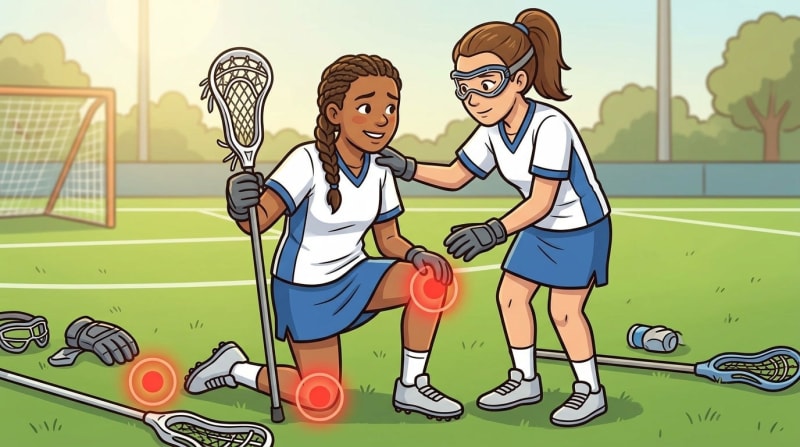
Imburgia's concern is backed by the data. According to the AOSSM Sports Medicine Update, female athletes sustain ACL injuries at two to eight times the rate of male athletes. Women's lacrosse has an incidence rate of 0.112 per 1,000 athlete-exposures — among the highest of any sport for female athletes.
The numbers compound after a first injury. Female athletes face four times greater second ACL injury rates and six times greater risk to the other knee. Going back on the field without addressing the movement patterns that contributed to the first injury raises the odds, not resets them.
Neuromuscular training programs offer a documented counter. A 2026 AOSSM prevention framework found that high-compliance participants showed an 88% reduction in ACL injury risk. Peak injury hazard falls between ages 16 and 20 — exactly the high school window.
How Pittsford Athletes Can Get Started
How Pittsford Athletes Can Get Started
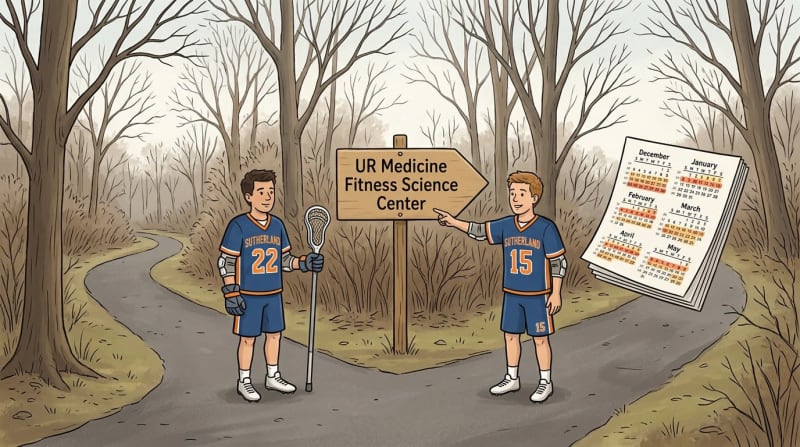
Every athlete starts with a movement and performance assessment before any training begins. The program recommends starting weeks or months ahead of the season.
For fall sport athletes — soccer, field hockey, cross country — that window has already closed for this year. For winter and spring sport athletes, including lacrosse players like Imburgia's future Sutherland teammates, the calendar is still open.
Content ID: m9htZRxOCTnvBB618ppUCqkL
See an error? Tell us.



1 Comment
Comment from Facebook
Very cool. Great to see a Pittsford student taking advantage of something like this. Anything that can help young athletes stay healthy and hopefully prevent a serious injury before it happens is a win in my book. Nice job, Presley!
Sep 9, 2026 at 1:40 am
View on Facebook ↗Comments marked “from Facebook” were shared from our Facebook page. Commenter names are not published here — open the original thread to see them.
Share with the Community