
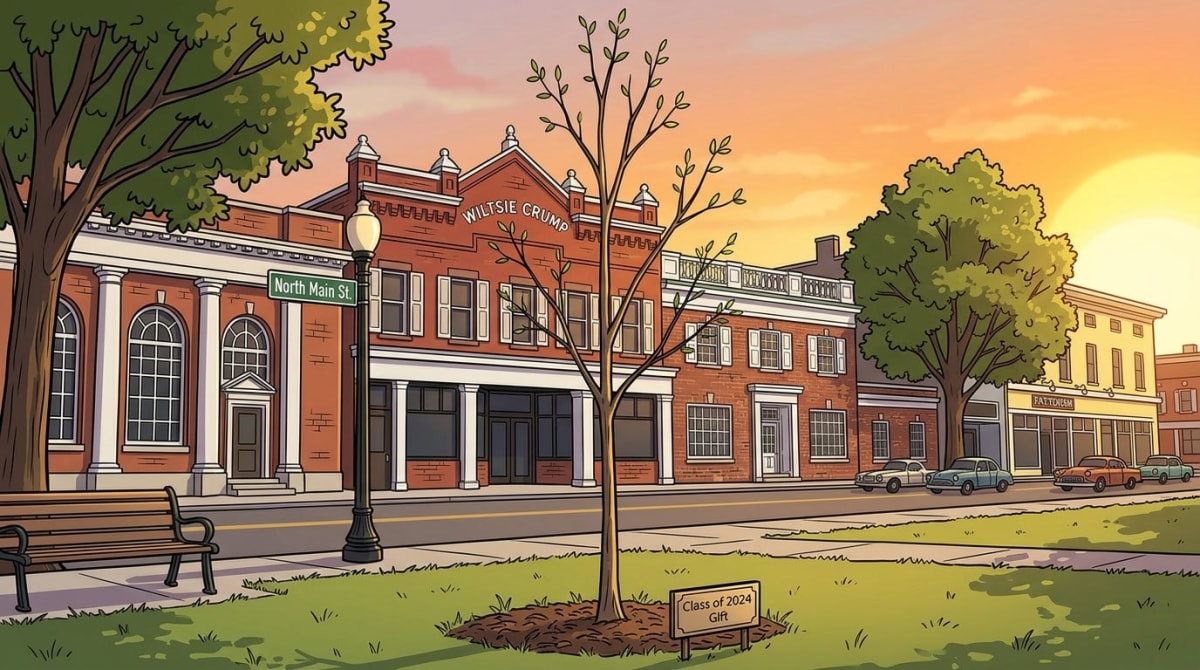
The Tree That Came Back: Concerts at Copper Beech and the Story of Pittsford's Most Famous Tree
The Short Version
- The copper beech that once stood on State Street measured 5.8 feet in diameter — a specimen old enough to have shaded travelers in Pittsford's earliest days as a town.
- When Kretzschmaria deusta fungus made removal unavoidable, the Parks Department took cuttings first and cultivated approximately 100 genetic clones of the original tree, made available to residents.
- Copper Beech Park now occupies the corner of State Street and North Main Street — a Town-Village collaboration designed as a place to stop, not pass through.
- The free Concerts at Copper Beech series runs three Thursday evenings this summer: Kate Brewer (July 16), Perplexion (July 30), and Marye Lobb (August 13), all unticketed with food on site.
- The first cloned sapling stands at the North Main Street parking lot entrance — the same tree, still growing, just a few feet from where the park now hosts a whole village on summer evenings.
There is a small tree growing at the edge of Copper Beech Park on North Main Street. If you haven't stopped to look at it, you might drive past and see nothing remarkable — just another young sapling at the edge of a parking lot. But that tree is a genetic clone of one of the oldest and most storied trees Pittsford has ever known. This summer, the park built in the original tree's honor is hosting the Concerts at Copper Beech series — three free Thursday evenings of live music in the heart of the village, open to anyone who shows up.
A Tree That Stood for Centuries
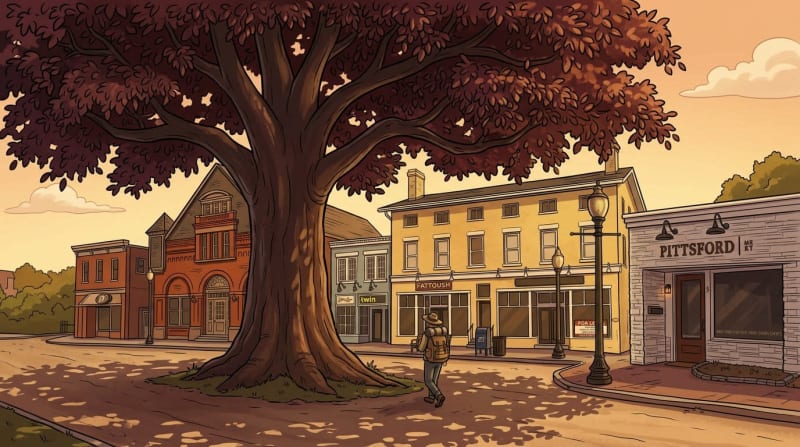
A Tree That Stood for Centuries
The copper beech that once stood on State Street was not just a large tree. At its widest point, according to the Town of Pittsford, it measured 5.8 feet in diameter — a measurement that, once you try to picture it, stops being an abstraction and becomes something you have to put your arms around to understand. The town's own account notes that it "likely provided shade to travelers on Pittsford's streets during its earliest days as a town." The travelers they're describing existed before anyone alive today can remember. The tree was already there.
Copper beeches are slow growers. A specimen that reaches 5.8 feet in diameter has been in the ground for generations — long enough to become part of the texture of a place the way a landmark building might. You stop noticing it because it's simply always been there: the deep burgundy canopy in summer, the shade stretching across the sidewalk, the sense that this village has been here a long time and knows it.
Then came the diagnosis: Kretzschmaria deusta, a fungus that causes what arborists call soft-rot. It works from the inside out, and by the time it's confirmed, the damage is already irreversible. Removal was the only option. What do you do when something that has been part of a place for generations simply has to come down?
The Town's Response: 100 Clones Before the Removal
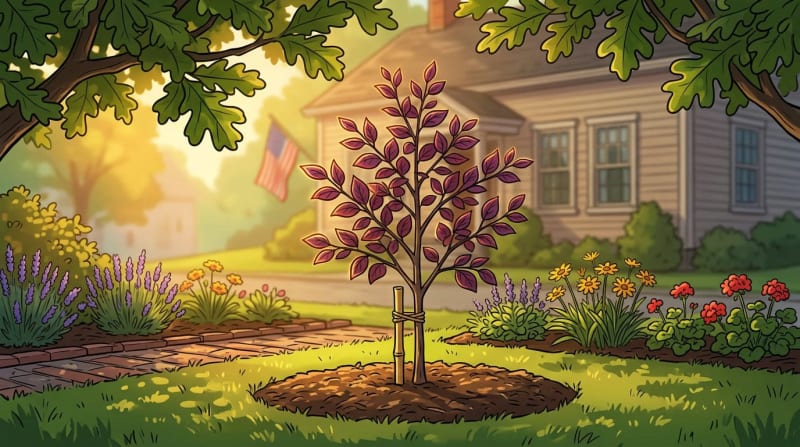
The Town's Response: 100 Clones Before the Removal
The answer Pittsford came up with was not to mourn the tree, but to propagate it.
Before the copper beech came down, the Parks Department collected cuttings from healthy sections and began cultivating them. They produced approximately 100 saplings — not just trees of the same species, but actual genetic clones of the original. The same tree, multiplied. Made available to residents to plant in their own yards. If you walk the streets of Pittsford and see a young copper beech in someone's front garden, there's a real chance you're looking at the old State Street tree, still growing.
"likely provided shade to travelers on Pittsford's streets during its earliest days as a town"
— Town of Pittsford, Copper Beech Park page
The first of those clones was planted at the North Main Street entrance to the municipal parking lot, directly beside where the new park now stands. It's not big enough yet to give much shade. But it's there. It's the same tree. And in a generation it will be something people stop to look at the way their grandparents stopped to look at the original.
What does it mean to a community when it decides that a tree is worth saving — not just symbolically, but genetically?
The Park Redesigned: What Copper Beech Park Looks Like Today
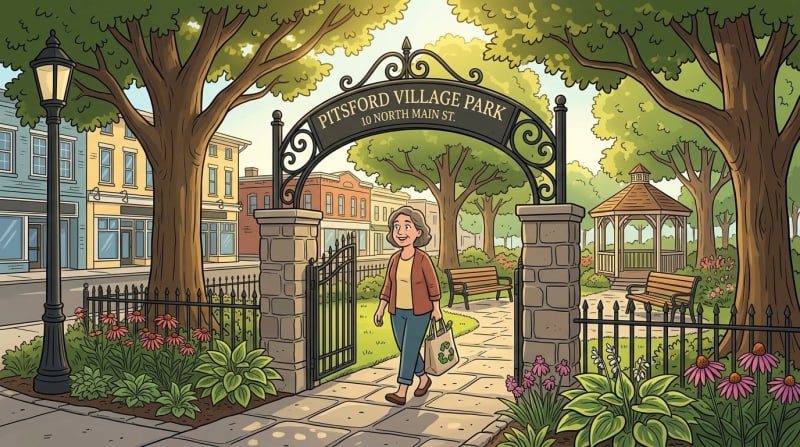
The Park Redesigned: What Copper Beech Park Looks Like Today
The park that now bears the copper beech's name sits at the corner of State Street and North Main Street in the center of the village. The redesign was a collaboration between the Town and Village of Pittsford — not always a simple thing to coordinate — and the result is a space that invites people to stop rather than pass through. There's seating, room for games, space for a food vendor, native plantings that give the corner texture and life.
You enter at 10 North Main Street, right beside the municipal parking lot — easy to reach whether you're coming from a parking spot after work or walking down from the canal. The park isn't trying to be grand. The best neighborhood spaces usually aren't. They just need to be present, usable, and cared for. Copper Beech Park reads as all three.
Concerts at Copper Beech: Who's Playing This Summer
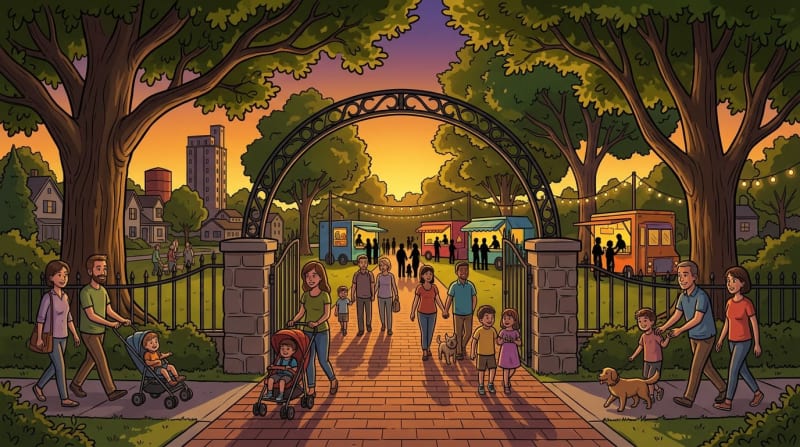
Concerts at Copper Beech: Who's Playing This Summer
Three free Thursday evening concerts are coming to Copper Beech Park this summer as part of Concerts at Copper Beech:
- July 16 — Kate Brewer
- July 30 — Perplexion
- August 13 — Marye Lobb
All three concerts are free and unticketed — no registration, no cost, open to anyone who walks through the gate. Food will be available on site each evening. Check the Town of Pittsford events page for current timing and vendor details as each date approaches.
Three evenings. Three different sounds. The same corner of the village each time. There is something about a recurring event in a specific place that begins to accumulate meaning — after a while, it becomes something you simply know is there, the way the tree once was.
How to Have a Perfect Evening at Copper Beech
How to Have a Perfect Evening at Copper Beech
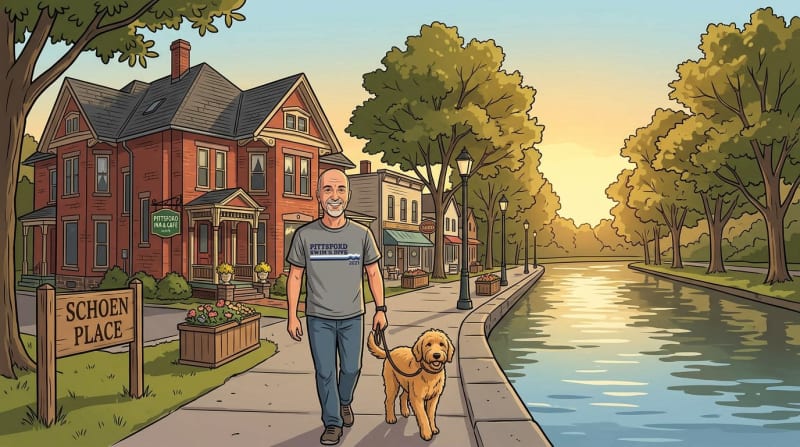
The simplest version: come to 10 North Main Street, bring a blanket or a low chair, and let the evening unfold. The concerts are free. The park is open. You don't need anything else.
If you want to extend it, Schoen Place is a short walk along the canal — easy waterside time before or after the music. The village corridor has restaurants close enough that you can build a full evening around the concert with almost no planning.
But the thing that makes an evening like this work isn't logistics. It's that the park you're sitting in was built with care. Someone took cuttings from a dying tree before it came down. Someone designed a space and named it for what was lost. Someone put together three free summer evenings and made them open to anyone who shows up.
What kind of village takes that kind of care? The kind where showing up on a Thursday feels like exactly the right thing to do.
Content ID: 72963hAnVxGE4H1IqrK5Nc9T
See an error? Tell us.

3 Comments
Comment from Facebook
The copper beech on State Street originally sat in front of the Battams family homestead. The home was demolished in the 1960s during a spate of demolitions of historic buildings. Fortunately the Village passed one of New York State's first historic preservation ordinances in 1971. Largely because of the work of the Historic Preservation Board few buildings have been lost over the last fifty years.
Jul 14, 2026 at 4:47 pm
View on Facebook ↗Adam Stetzer
Thank you for sharing this piece of living history — it makes that copper beech even more meaningful knowing it outlasted the home it once stood beside. It's a quiet reminder of how much we owe to the people who fought to preserve what makes Pittsford worth caring about. Stories like this are exactly why this community matters so much.
Jul 27, 2026 at 10:08 pm
View on Facebook ↗Comment from Facebook
Great context! Thanks Bob!
Jul 15, 2026 at 1:23 am
View on Facebook ↗Comments marked “from Facebook” were shared from our Facebook page. Commenter names are not published here — open the original thread to see them.
Share with the Community